

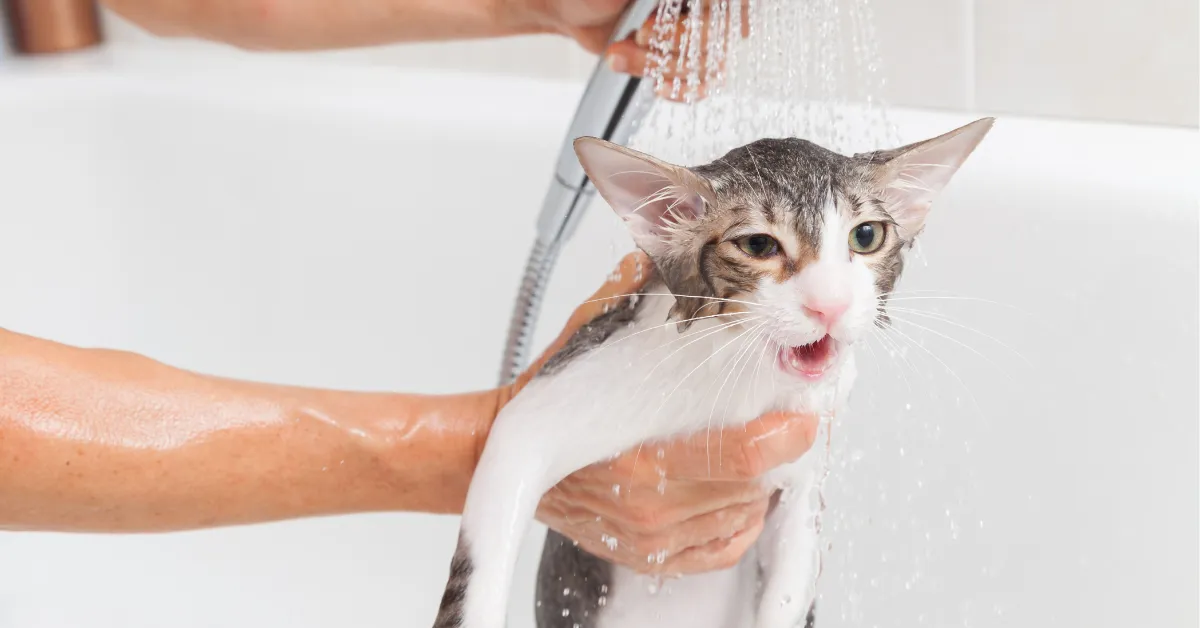
Most cats go their entire lives without a single bath. They are designed to clean themselves, and they are remarkably good at it. But sometimes a cat gets into something awful, and the question becomes: what do you use?
Baby shampoo comes up a lot. It sounds gentle. It is marketed for the most sensitive skin imaginable. Surely it is fine for a cat.
The answer is more complicated than most people expect.
Why Baby Shampoo Is Not Ideal
The issue comes down to skin pH. Human skin, including a baby’s, sits at around 5.5 on the pH scale, which is mildly acidic. Cat skin sits between 6.2 and 7.5, which is closer to neutral.
Shampoos are formulated to match the skin they are designed for. Baby shampoo is built around human pH. When it is used on a cat, the mismatch can strip the natural oils from feline skin, leaving it dry and itchy.
So can you use baby shampoo on a cat? In a genuine emergency, once, when nothing else is available, it is unlikely to cause serious harm. But it is not a good habit, and it is not the right tool.
What to Use Instead
A shampoo formulated specifically for cats is the right answer. Cat shampoos are pH-balanced for feline skin and generally free from the fragrances and chemicals that irritate cats.
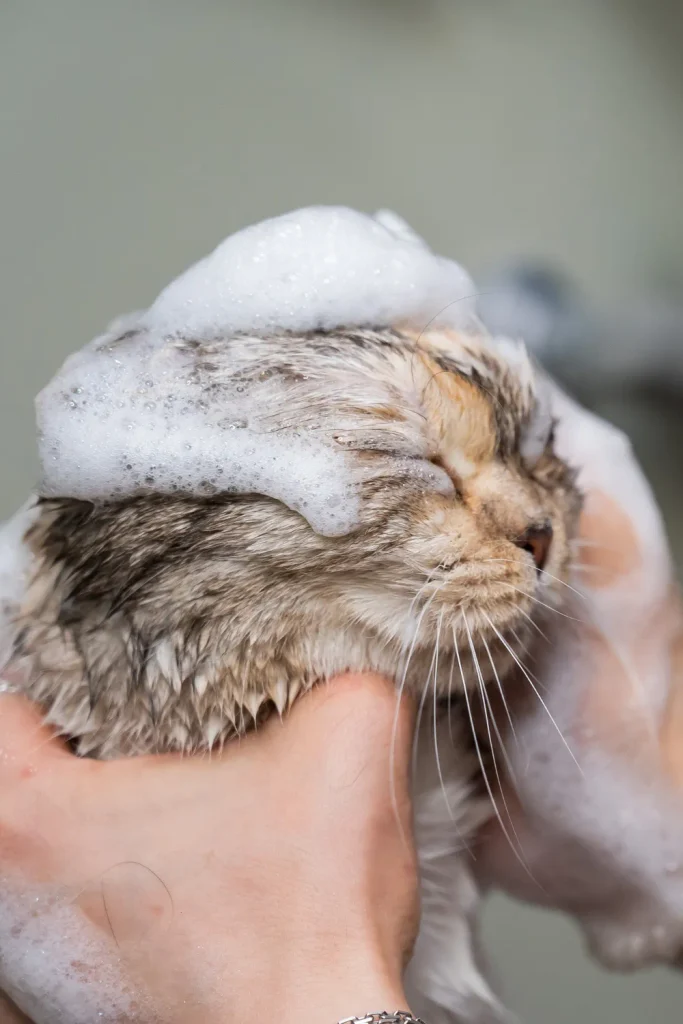
If you are in a pinch, a basic mix of finely ground oatmeal, a small amount of Dawn dish soap, and warm water is a commonly cited emergency alternative. Whatever you use, rinse thoroughly. Residue left on the coat is what causes most of the skin irritation after a bath.
When Does a Cat Actually Need a Bath
This is the part most owners skip. The ASPCA notes that a bath is only necessary when a cat is visibly dirty, has gotten into something sticky or smelly, or has a skin condition requiring medicated treatment. Engine oil, paint, a flea treatment that needs to come off fast. Those are the real scenarios.
Cats can also get into candles, wax, or household chemicals, and knowing what to watch for before something turns into an emergency can save you a lot of stress.
Outside of that, bathing a healthy cat adds stress without much benefit. For cats that are already anxious, building trust before attempting anything like a bath makes a real difference in how the whole experience goes.
Some cats with mobility issues or health conditions may need occasional help grooming areas they cannot reach. Dr. Paola Cuevas, a veterinarian with over 18 years of experience, notes that older cats sometimes stop grooming as efficiently as they once did, and those are the situations where stepping in actually helps.
Cats dealing with conditions like diabetes can show subtle changes in their daily habits that are easy to miss, and grooming is often one of the first things that shifts.
Conclusion
Has your cat ever needed an emergency bath? Drop your experience in the comments below. What worked, what did not, and how did your cat handle it?
For more cat health and care stories, follow Furry Found on X (Twitter) and Facebook, and visit Furry Found for more.
This article is for informational purposes only.
[…] if a cat comes in soaking wet, knowing how to handle a wet cat safely can make a difference in how quickly they warm back […]
[…] if a cat comes in wet and needs more than a quick towel-off, understanding when a cat actually needs washing and what to use matters more than most people […]