

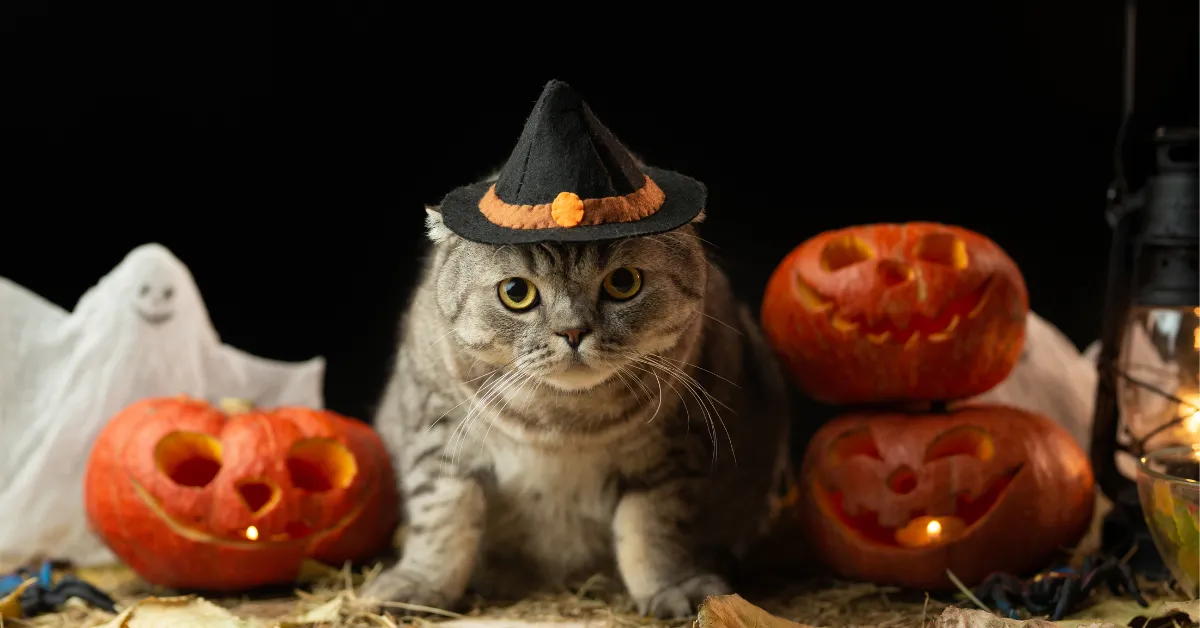
Halloween is one of the most dangerous nights of the year for cats, and most of the risks have nothing to do with superstition.
Front doors opening constantly, strangers in masks, lit candles at cat height and a bowl of chocolate sitting on the counter. Any one of these is a problem. All of them together is a genuinely bad night for an indoor cat.
1. Keep the Candy Completely Out of Reach
Chocolate is toxic to cats in all forms, with dark chocolate and baking chocolate being the most dangerous. The theobromine in chocolate can cause vomiting, diarrhea, seizures and in high doses, death.
Sugar-free candy is a separate problem. Xylitol, used as a sweetener in some candies and gum, can cause a rapid drop in blood sugar even in small amounts.
Glow sticks and glow jewelry are another one people miss. Cats bite them. The liquid inside is not lethal but it causes intense drooling, foaming and distress that looks alarming and sends owners to the emergency vet at midnight.
If your cat gets into anything, the ASPCA Animal Poison Control Center is available at (888) 426-4435 around the clock.
2. Candles Are a Real Fire Risk
A carved pumpkin with a real candle inside sits at exactly the height a curious cat can knock over. Cats do not avoid flames reliably.
Use battery-powered candles for any decoration your cat can reach. This includes jack-o-lanterns on low tables, candles in windows and anything on the floor.
Singed whiskers heal. A knocked-over candle on a dry Halloween night does not necessarily end well.
3. Costumes: Know When to Stop
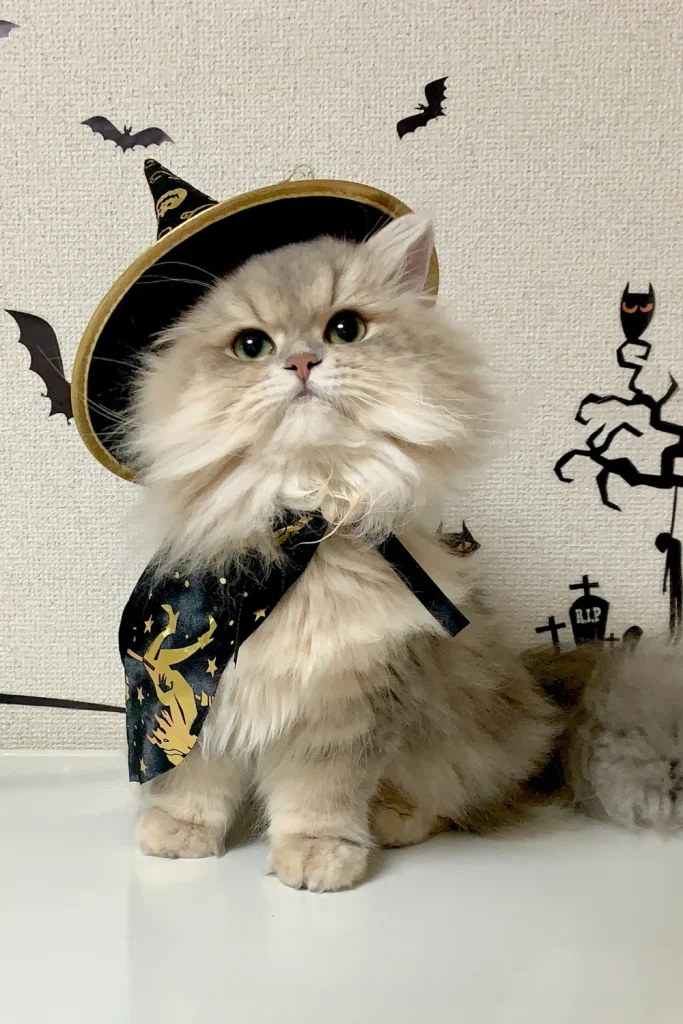
A costume that fits well and does not restrict movement or breathing can be fine for some cats. Most cats do not fall into that category.
Watch for flattened ears, a tucked tail, freezing in place or trying to get the costume off. Any of these means the costume comes off immediately.
The specific risks for cats are different from dogs. Cats have a higher respiratory rate and are more sensitive to anything that constricts their chest or covers their face. Check that the neck fits two fingers loosely, that nothing covers the nose or mouth, and that there are no small parts to chew off. A festive collar or bandana is a reasonable alternative for cats who hate being dressed up.
According to Dr. Keri Cataldo-Rogers of The Neighborhood Vet, costumes should never limit movement, sight or the ability to breathe, and any distress is reason to stop.
4. The Front Door Is the Biggest Risk
Trick-or-treaters mean the front door opens and closes dozens of times between 5 and 9 p.m. A startled cat that bolts through an open door on Halloween night is harder to find than on any other night of the year.
The practical solution is to put the cat in a room with a closed door before trick-or-treating starts. Not a crate, not the bathroom. A room with their bed, water, food and something familiar, with the door shut and a sign on it if other people are in the house.
Understanding what cats actually need to feel safe in an enclosed space is useful here. The same principles that work for a new foster cat, a quiet room with familiar smells and no forced interaction, work just as well for a Halloween night.
If your cat is microchipped and the chip information is current, that is the thing most likely to get them home if they do get out. Check the registry tonight, not on October 31st.
5. Keep Essential Oils Away
This one appears on almost no Halloween safety list and it matters. Diffusers are popular home decor. Many essential oils commonly used in diffusers, including eucalyptus, tea tree, clove and cinnamon, are toxic to cats through inhalation and skin contact.
If you are decorating with a diffuser running, move the cat to a different room and ensure there is ventilation.
October is also a good time to check vaccination records for outdoor cats. A Vermont cat died this month with suspected rabies after contact with wildlife, and the reminder applies through the fall season. If your cat goes outside, this is a good time to check that their vaccinations are current.
Why This Matters
Halloween falls at the same time shelters are managing the end-of-kitten-season overcrowding. October is already a high-pressure month for animal welfare organizations.
A lost cat on Halloween night, a poisoning call at 10 p.m., or a cat that escapes during a party adds to a system that is already stretched. Earlier this month, 15 cats died in Wichita from a virus that is entirely preventable with routine vaccination. October is not the month to let routine care slip.
The tips above are not complicated. A closed door, battery candles and a candy bowl on a high shelf cover most of the risk. If something does go wrong, the ASPCA Animal Poison Control Center is available at (888) 426-4435 around the clock.
What does your cat do on Halloween night? Tell us in the comments.
For more practical pet guides and rescue news, follow Furry Found on X and Facebook.
Disclaimer: This article is for informational purposes only and is not veterinary advice. Contact your veterinarian or ASPCA Poison Control if your cat ingests something harmful.
[…] Candles are one of the most common ignition sources in house fires involving pets. If you have cats and decorative candles at home, this is worth reading before the holiday season sta… […]