

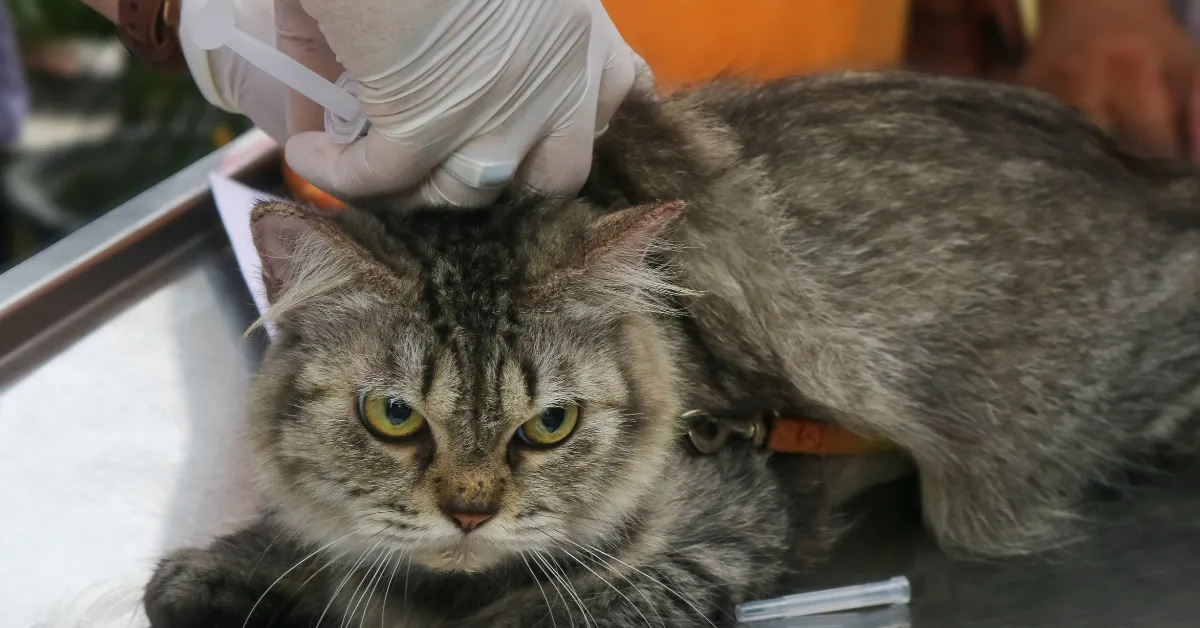
An unvaccinated cat died in Sharon, Vermont on September 14, and town officials are now warning residents that rabies may have been circulating in the area.
The cat was found along Route 14, near the intersection of Quarry Road and Erad Lane. It showed signs consistent with rabies before it died.
What Officials Know and What They Don’t
The Town of Sharon issued a public notice on Wednesday. Vermont State Public Health Veterinarian Dr. Natalie Kwit confirmed that the cat’s clinical history, time spent outdoors and a suspected wound from a wild animal made rabies a concern.
However, the cat was never confirmed positive through laboratory testing. In some cases, animals do not reach the lab in the right condition for a conclusive result.
“If this cat indeed had rabies, it means it circulated in the area,” Kwit told the Valley News.
The Health Department conducted risk assessments but said no humans have been tested for rabies as a result of this incident.
Why the Vaccine Status Matters
The cat was an indoor/outdoor pet and had not been vaccinated against rabies.
Vermont law requires that all cats and dogs be vaccinated against rabies by a licensed veterinarian. That requirement exists for a reason.
Kwit was direct about the takeaway: “Take this example mainly as a message for pet owners to keep their animals updated on vaccines for rabies.”
Pets that are vaccinated can still be exposed, but the vaccine is highly effective at preventing infection. Unvaccinated pets that are bitten by a rabid animal face a much harder outcome.
Where Rabies Stands in Vermont This Year
So far in 2026, Vermont has recorded 46 confirmed rabies cases, according to the Department of Health. Raccoons account for the largest share, with 18 cases. Bats follow with 11.
In Upper Valley towns specifically, three cases have been confirmed this year, all in bats: two in Strafford and one in Royalton.
No cats in Vermont have tested positive for rabies in recent years, according to state records. The Sharon case is unusual precisely because it involves a domestic pet rather than wildlife.
No human has ever contracted rabies in Vermont, but Kwit noted that cases in pets are more concerning from a public health standpoint because pets interact with people regularly.
This is worth reading alongside what happened in Wichita earlier this month, where 15 cats died from a different but equally preventable disease. In both cases, vaccination was the variable that separated the cats at risk from those that were not.
What to Do
Sharon officials advised residents to keep pets indoors at night and supervise them when outside.
The Department of Health warns against approaching any animal that is behaving strangely.
If you or a pet are bitten by an animal suspected of having rabies, wash the wound immediately with soap and water. Try to contain the animal so it can be tested if possible. Contact a healthcare provider right away. Treatment given soon after exposure can prevent rabies from developing.
Rabies symptoms in pets include behavioral changes, excessive drooling and rapid decline once the infection takes hold.
The Vermont Rabies Hotline is available at 1-800-472-2437 for anyone who encounters a potentially rabid animal.
Cats that spend time outdoors face risks that indoor cats don’t. Understanding what fostering and responsible outdoor supervision look like in practice is part of keeping them safe, whether you own them outright or are caring for them temporarily.

Why This Matters
Rabies is one of the few diseases that is almost always fatal once symptoms appear in an unvaccinated animal or person. The window for effective treatment is the period immediately after exposure, before the virus reaches the brain.
The Sharon case is a reminder that the vaccine requirement for cats and dogs is not a formality. An indoor/outdoor cat has regular contact with the same wildlife that carries rabies across Vermont every year.
Emergencies that involve cats often reveal how unprepared both owners and local systems are. A wildfire, a disease outbreak, a suspected rabies case. The cats that come through those situations tend to be the ones with a vaccinated, documented history and an owner who was paying attention.
Public Health Officer Scott Henkels had not responded to media requests as of the time of reporting. The town has not released further details about the circumstances of the case.
Has your cat’s rabies vaccination lapsed? This might be the moment to check. Tell us in the comments.
For more animal health news and practical pet guides, follow Furry Found on X and Facebook.
Disclaimer: This article is for informational purposes only and is not veterinary or medical advice. Contact your veterinarian or healthcare provider for guidance on rabies vaccination or exposure.