

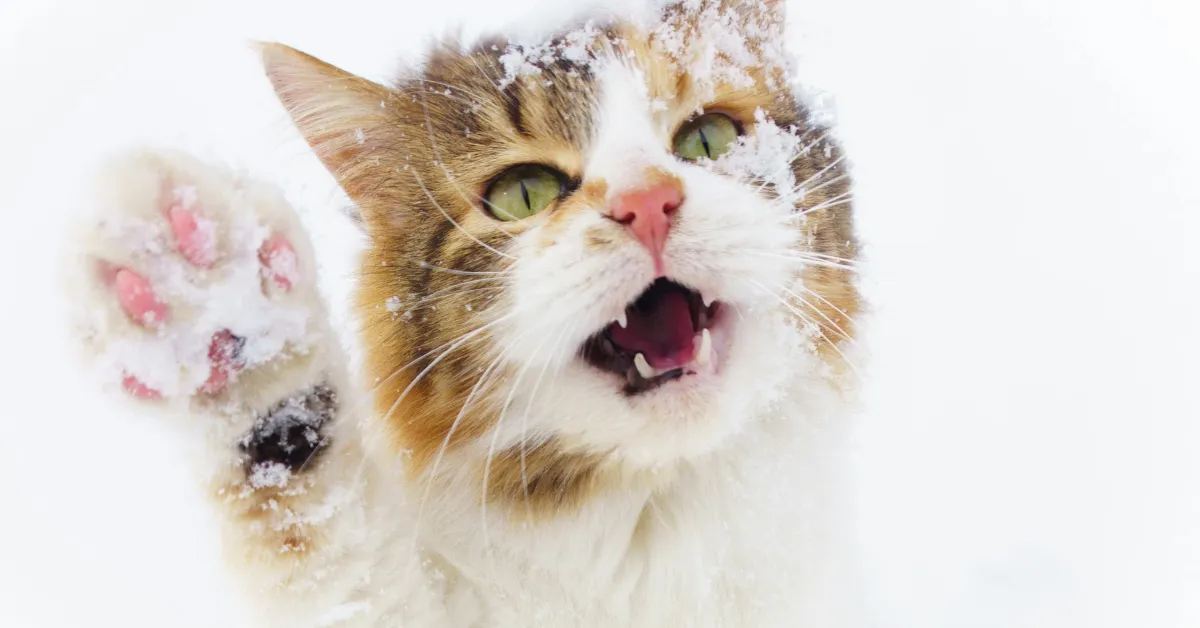
Most people think about winter cat care in terms of warmth: a cozy bed, a heater nearby, maybe a second blanket. Those things matter. But the part that actually gets cats into trouble in winter is much lower down.
The paws are the first point of contact with everything dangerous on the ground, and they are the last thing most owners think to check.
What Is Actually Happening on Winter Walks
Ice melt products and road salt are everywhere once temperatures drop. Cats that go outside, even briefly, are walking through these chemicals and then licking their paws clean the moment they get back inside.
The ASPCA puts it plainly: winter walks can become dangerous when chemicals from ice-melting agents are licked off bare paws. Washing and drying a cat’s paws and stomach after every outing removes the residue before it becomes a problem. Petroleum jelly applied to the pads before going out gives an additional layer of protection.
Cracked pads and gravel lodged between toes are also worth checking for after each walk. These tend to go unnoticed until a cat is already favoring one leg.
The Coat Is Changing Too
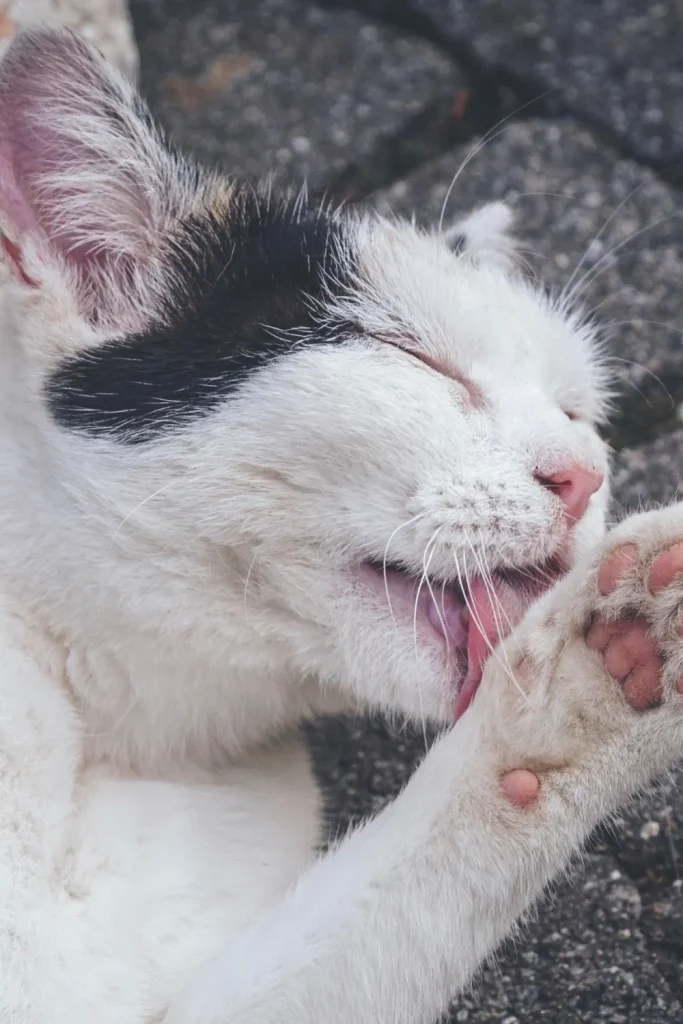
Cats shed their summer coat in fall and grow a thicker one for winter. More shedding means more loose fur, more tangles, and more hairballs if brushing does not increase to match.
Bathing should actually happen less in winter. Frequent bathing strips the essential oils that keep a cat’s skin and coat healthy when indoor heating dries out the air. When a bath is necessary, a moisturizing shampoo makes a real difference.
Dryer sheets are worth mentioning here: they get used a lot in winter to deal with static, but they contain ingredients that are toxic to cats that lick their fur after contact.
Older Cats Need a Closer Look
Catster notes that cats spend 30 to 50 percent of their time grooming themselves, but that drops off with age. Senior cats and cats carrying extra weight have a harder time reaching certain spots, especially around the hindquarters.
Mats form quickly there and cause real pain. Cold weather also makes arthritis worse, so a cat that is moving more stiffly than usual may simply be less able to do what it used to.
Warm sleeping areas off cold floors and away from drafts help. So does stepping in with a brush more often during the months when the cat is clearly not keeping up.
Cats that have started pulling back from habits they once kept without thinking are often the ones that need the most help this time of year.
The ASPCA recommends washing and drying a pet’s feet and stomach after every outdoor exposure in winter, and inspecting pads for cracking, redness, or trapped debris. It takes about thirty seconds and is one of the most practical things an owner can do this time of year.
And if a cat comes in wet and needs more than a quick towel-off, understanding when a cat actually needs washing and what to use matters more than most people realize.
The same seasonal shift that makes paws vulnerable also brings new hazards indoors. Candles and certain seasonal products carry real risks for cats, and knowing what to watch for can prevent a problem before it starts.
Conclusion
Have you noticed any changes in your cat’s paws or coat once winter hits? Drop what you have seen in the comments below. Small things are easy to miss until someone else points them out.
For more cat care tips and stories, follow Furry Found on X (Twitter) and Facebook, and visit Furry Found for more.
This article is for informational purposes only.