


A cat bite rarely looks serious in the moment. Two small puncture marks, maybe a little blood. Most people rinse it off and move on. That is exactly where things go wrong.
Cat bites are one of the most deceptive injuries a person can get from an animal, and the danger is not in how they look. It is in what gets left behind.
Why Cat Bites Are Different
Cat teeth are narrow and sharp. When they puncture skin, they go deep and seal the wound behind them, trapping bacteria under the surface where it is warm, dark, and ideal for infection to grow.
The most common bacterium in cat mouths is Pasteurella multocida, and it is found in nearly every cat. A 2024 retrospective study identified it as the most common pathogen isolated from animal bites. It can begin causing infection within hours of a bite, not days.
Redness, swelling, or warmth at the bite site showing up fast is a sign to take seriously, not wait out.
What the Numbers Actually Say
Around 400,000 cat bites happen in the United States each year. In children, roughly 50 percent of cat bites result in infection. That is not a rare outcome. It is closer to a coin flip.
Beyond Pasteurella, cat bites can also transmit Bartonella henselae, the bacteria behind cat scratch disease, which is most common in children and more likely from kittens, strays, and cats that hunt. Tetanus is another real risk if a vaccination is more than five years old.
Dr. Shawna Garner, Lead Veterinarian at FirstVet, has noted that cats carry a large bacterial load in their mouths precisely because they do not brush their teeth, making even a quick bite a meaningful exposure. Untreated infections can escalate to sepsis, which requires hospitalization.
Healthline notes that cat bite infections can develop within hours or take several days to appear, which is part of why people underestimate them. By the time it looks bad, it has already been progressing.
What to Do Right After a Bite
Wash the wound thoroughly with soap and water immediately. That step alone reduces the bacterial load more than most people realize.
After washing, apply an antibiotic and cover it with a clean bandage. If redness, swelling, or warmth develops within the next 24 hours, see a doctor. The standard treatment is amoxicillin-clavulanate, and early antibiotics usually stop an infection before it spreads.
A tetanus booster is worth asking about if the last one was more than five years ago. And if the cat was a stray or had unknown vaccination history, rabies exposure needs to be part of the conversation with a doctor.
The risks from unvaccinated cats are real, and a Vermont town found that out after an outdoor cat died before anyone knew it had been exposed.
One thing to avoid during a bite: pulling away sharply. That reinforces prey-drive behavior and worsens the wound. Stay calm, wait for the cat to release, and move back slowly.
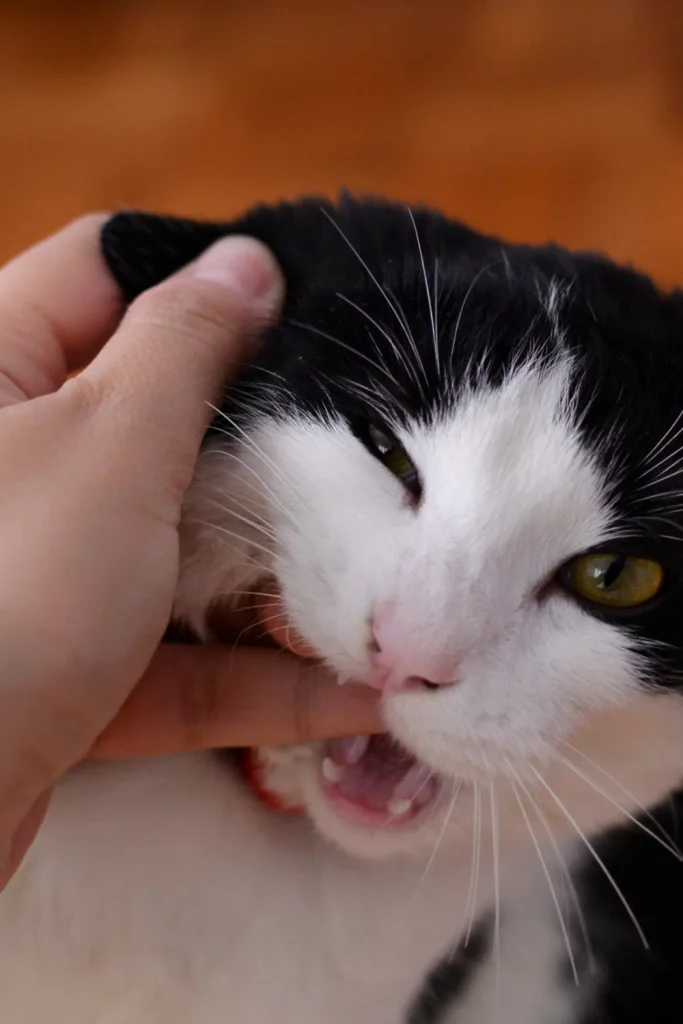
Cats that bite unprovoked are often stressed or untrusting, and understanding what that actually looks like and how long it takes to change helps prevent the next bite from happening.
Most cats bite because something went wrong in the interaction, not because they are aggressive. A cat that is beginning to feel safe shows it in ways that are easy to miss.
Conclusion
Have you or someone you know ever had a cat bite that turned into a real infection? Drop what happened in the comments below. These stories are more common than people expect.
For more cat health and safety news, follow Furry Found on X (Twitter) and Facebook, and visit Furry Found for more.
This article is for informational purposes only.