


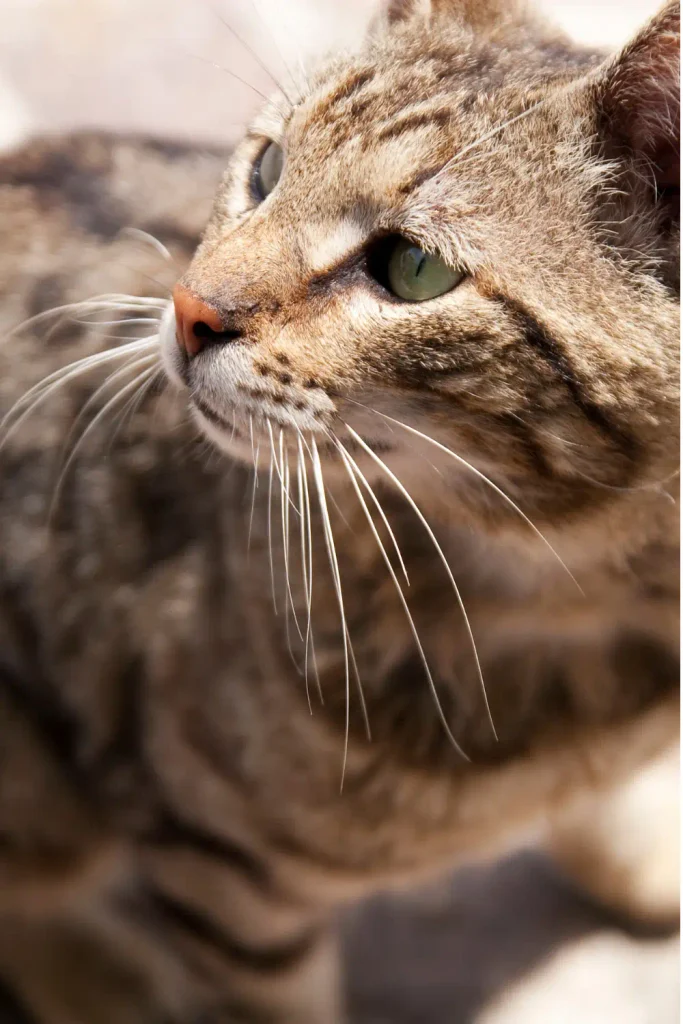
A dog killed a community cat named Casper on Romany Road in Lexington over the weekend.
Witnesses say the dog was on a leash. They say the owner did not step in.
The man has not been found. If he is, the maximum penalty under the ordinance being used is $500.
What Witnesses Saw
Michael Parsons lives near the cat colony. He said he looked out his window when he heard commotion outside.
“The owner was with the dog, the dog was on a leash, but he did not appear to be doing anything to stop the attack,” Parsons said.
His partner, Laura Cox, went outside and confronted the man afterward. She described the dog as possibly a hound mix.
Cox also noted the location. The area has no trespassing signs and is not somewhere someone would normally be walking a dog.
Who Casper was
Diane Parrish is the founder of Making a Difference Now, an organization that has been feeding, spaying and neutering cats in the area for nearly a decade.
She said Casper was around 15 years old.
“It’s been hard. It’s been hard. She deserved so much better than she got,” Parrish told WKYT.
What the Law Actually Allows
Lexington Fayette Animal Care and Control Lieutenant Aaron Evans was direct about what investigators are working with.
“The ordinance we have that covers this type of situation is not, as of now, an arrestable offense, unfortunately,” Evans said.
The charge being considered is a local nuisance ordinance. The fine runs from $25 to $500.
There is a reason the charge is that low, and it has to do with how Kentucky law is written.
State cruelty statutes can reach a Class A misdemeanor or higher, but those charges generally require showing that harm was done intentionally or wantonly. A dog on a leash attacking a cat while its owner stands nearby is difficult to prosecute as intentional cruelty under current state law, even when witnesses say the owner did nothing.
Parrish said she wants Kentucky to do better, and that her organization will keep pushing for it.
“Every person has a voice to lend to the effort to upgrade our laws and upgrade the enforcement of them,” she said.
People who work in community cat care and fostering know this gap well. Managed colonies take years to build, and the legal protections rarely match the effort that goes into them.
Why This Matters
Casper was part of a managed colony. She had been cared for, fed and monitored for years.
Community cats exist in a legal grey area. They are not owned, which means when something happens to them, the consequences are often determined by local nuisance ordinances rather than state animal cruelty law.
That gap shows up across the country. Kentucky’s current animal cruelty statutes illustrate exactly why: the language around intent is what determines whether a charge is possible at all.
It is not just attacks. Community cats face threats that city systems are often not set up to handle. Wildfire evacuations leave colony cats behind with no owner to claim them. Disease outbreaks spread through unregistered colonies before anyone can respond. And when something goes wrong, the formal systems people expect to step in often cannot.
Parrish’s organization has spent nearly a decade building that colony. Casper had been part of it for 15 years.
A $25 fine is the floor of what the law currently allows for ending that.
If you have information about the dog’s owner, contact Lexington Fayette Animal Care and Control at (859) 255-9033.
Does your city have adequate protections for community cats? Tell us in the comments.
For more rescue news and practical pet guides, follow Furry Found on X and Facebook.
Disclaimer: This article is for informational purposes only and is not legal advice. No arrests have been made. Contact local authorities for guidance on a specific situation.
[…] Animal cruelty law gaps show up differently depending on the state and the circumstances. In Kentucky last week, a dog that killed a community cat while its owner watched resulted in a maximum fine of $500 under a nuisance ordinance. In Louisiana, leaving cats in 100 degree heat without water is 66 charges, the majority of them felonies. […]