

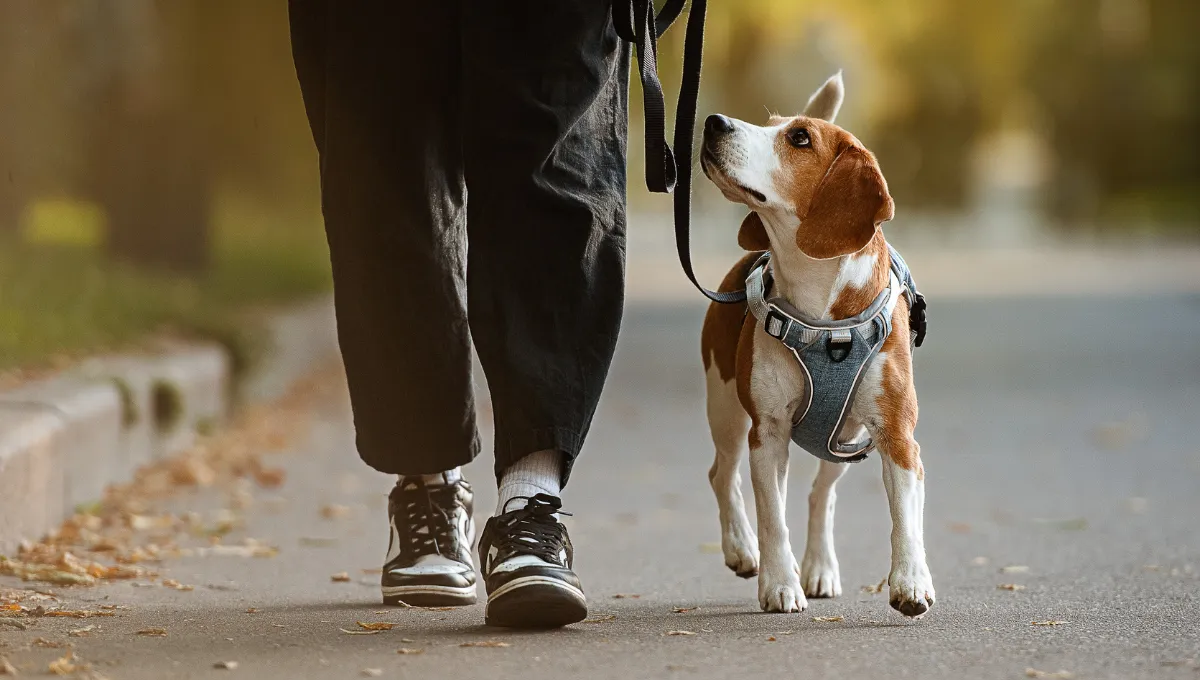
Most dog walking mistakes do not feel like mistakes. They feel like control, caution, and the right thing to do.
That is exactly why they keep happening.
1. Using a Retractable Leash
Retractable leashes feel like freedom. What they actually do is reward pulling. The more the dog pulls, the more leash they get, which reinforces the habit every single step.
When a dog hits the end of a fully extended line at a run, the sudden jerk can damage the trachea or spine.
The right equipment makes everything easier. Our breakdown of whether harnesses are actually better than collars covers what vets and trainers actually recommend based on your dog’s size and behavior.
2. Skipping the Sniff Breaks
Rushing through a walk without letting your dog stop and sniff is like going to the gym but not being allowed to exercise. Sniffing is how dogs process their environment mentally.
A 20-minute walk with regular sniff breaks is more tiring and satisfying than a 45-minute walk at your pace with no stops.
3. Allowing On-Leash Greetings With Every Dog You Pass
On-leash greetings are stressful for most dogs. The leash restricts natural body language, prevents them from creating distance, and makes communication between dogs nearly impossible.
As Good Housekeeping’s expert guide on dog walking mistakes notes, skipping the meet-and-greet is almost always the better choice unless you know both dogs are comfortable with it.
4. Letting Pulling Slide Because It Is Easier
Every step your dog takes while pulling teaches them that pulling works. The habit compounds. The fix is to stop, plant your feet, and wait for the leash to go slack before moving again. Consistency is the only thing that works.
5. Holding the Leash Too Short and Too Tight
A tight, short leash causes more pulling, not less. Dogs push against pressure, and a tensed leash gives them something to push against.
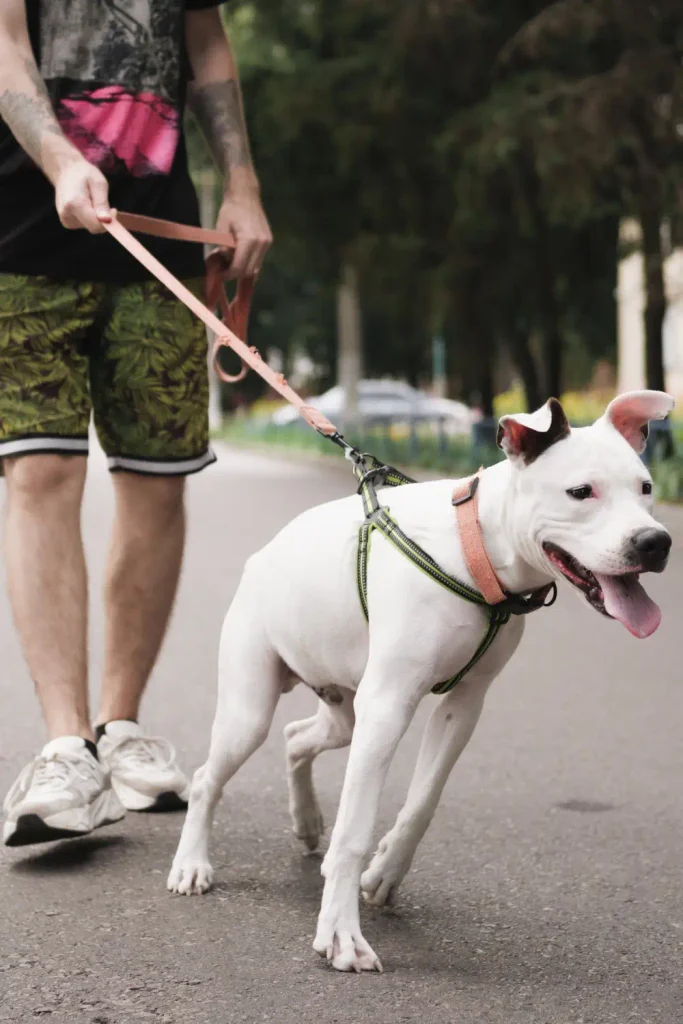
An 8 to 10-foot fixed leash with a relaxed grip gives your dog room to move naturally without pulling.
6. Relying Only on Leash Walks for Exercise
Most dogs spend 30 to 90 minutes a day outside, almost entirely on a six-foot leash. For young or high-energy dogs, this is not enough to meet their physical needs.
Leash walks are for mental stimulation and training. Off-leash time in a safe space is what actually meets the exercise need.
If leash walks are the only exercise your dog is getting, weight can creep up faster than you realize. These fall habits that cause dog weight gain explain exactly how it happens and how to catch it early.
7. Walking When You Are Stressed or Distracted
Tension in your body and your grip travels down the leash. A stressed owner often produces a reactive dog. Dogs read human emotion with remarkable accuracy.
According to AKC’s guidance on leash walking and pulling, controlling your own emotional state during a walk is one of the most underrated parts of training a dog to walk well.
8. Never Letting the Dog Choose Direction
A walk where the dog has zero input is a walk that leaves them understimulated. Letting your dog lead occasionally, especially toward interesting smells, gives them agency that reduces anxiety over time.
9. Ignoring Heat and Cold Conditions
Asphalt in summer can reach dangerous temperatures before you feel the heat yourself. In cold weather, short-coated and senior dogs may need a jacket long before you do.
Seasonal conditions change what safe walking looks like. These fall hiking tips for dog owners go into detail on what to watch for when temperatures drop and terrain gets unpredictable.
10. Skipping the Post-Walk Check
Check paws after every walk. A small cut or embedded burr between the toes can go unnoticed for days and become infected overnight. Takes thirty seconds.
Why This Matters
A Johns Hopkins University study published in 2023 in Medicine & Science in Sports & Exercise found that dog walking injuries more than quadrupled between 2001 and 2020, with over 422,000 US adults treated in emergency rooms. Top injuries were broken fingers, traumatic brain injuries, and shoulder sprains mostly from pulls, tangles, and falls that better equipment and habits prevent.
The Walk Should Feel Good for Both of You
If every walk ends with a sore shoulder and a frustrated dog, something in the routine needs to change.
Have you ever noticed your dog pulling more when you tighten your grip? Tell me in the comments, and follow Furry Found on X and our Facebook page for more practical pet guides like this.
Disclaimer: This article is for informational purposes only and is not a substitute for professional training advice.