

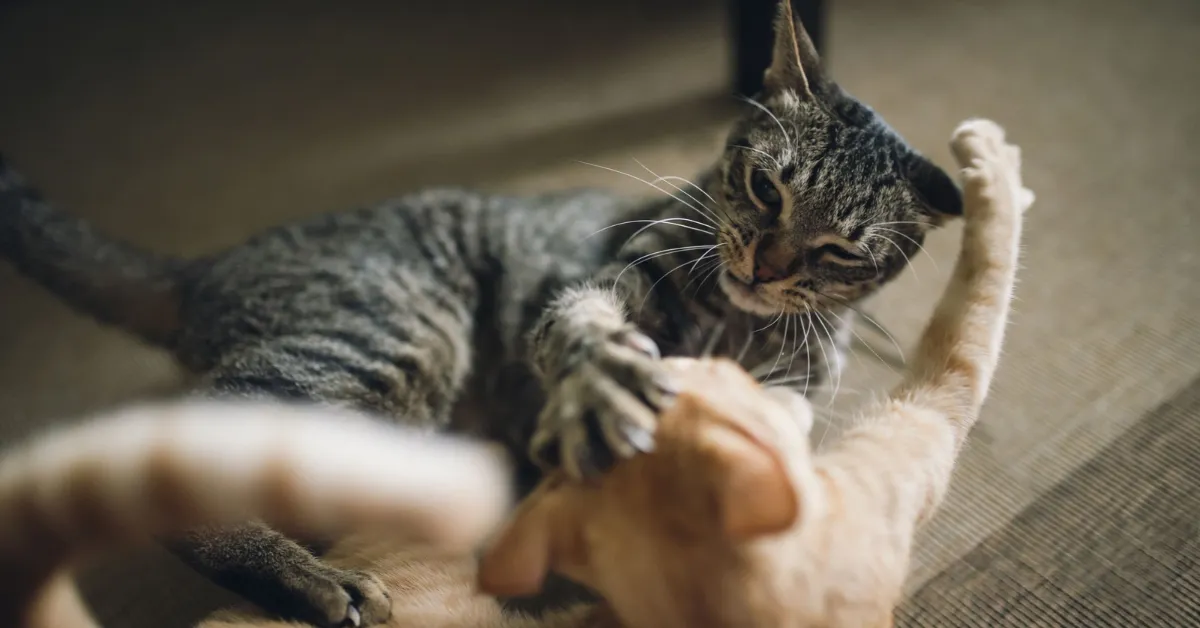
I still remember the first time I thought my two cats were getting along perfectly. No hissing, no fights, nothing. Then I noticed one of them hadn’t come into the kitchen in days.
That’s the thing about cat conflict. It can be completely silent. One cat sits in the doorway, the other stays away, and the house looks peaceful while one cat lives in fear.
The Quiet Signs Most Owners Miss
- Staring. A long, fixed gaze at the other cat is the most common warning sign, and it’s easy to dismiss as “just looking.”
- Blocking. One cat parks herself between the other cat and the litter box or food bowl. To you, she’s just resting. To the other cat, the path is closed.
- Avoidance. One cat only eats at night or skips certain rooms entirely.
Cats tolerating each other and cats getting along are two different things. A tense home can look calm for months.
Watch the Cat Who Hides
The targeted cat often looks sick, not scared. She hides, eats less, or starts peeing outside the litter box. Many owners blame illness, and sometimes that’s right. Pain can also trigger conflict, so get a vet check first.
Then spend a week watching three moments: mealtime, when you pet one cat, and when they move through the house. Jot down who backs off.
What to Change This Week
Never shout or use a spray bottle. It adds fear, and fear makes tension worse.
Spread out the resources instead:
- Put litter boxes in different rooms. Boxes side by side count as one.
- Give hiding spots two exits so no cat gets cornered.
- Add shelves or cat trees for height.
- Do two short play sessions a day to burn off energy.
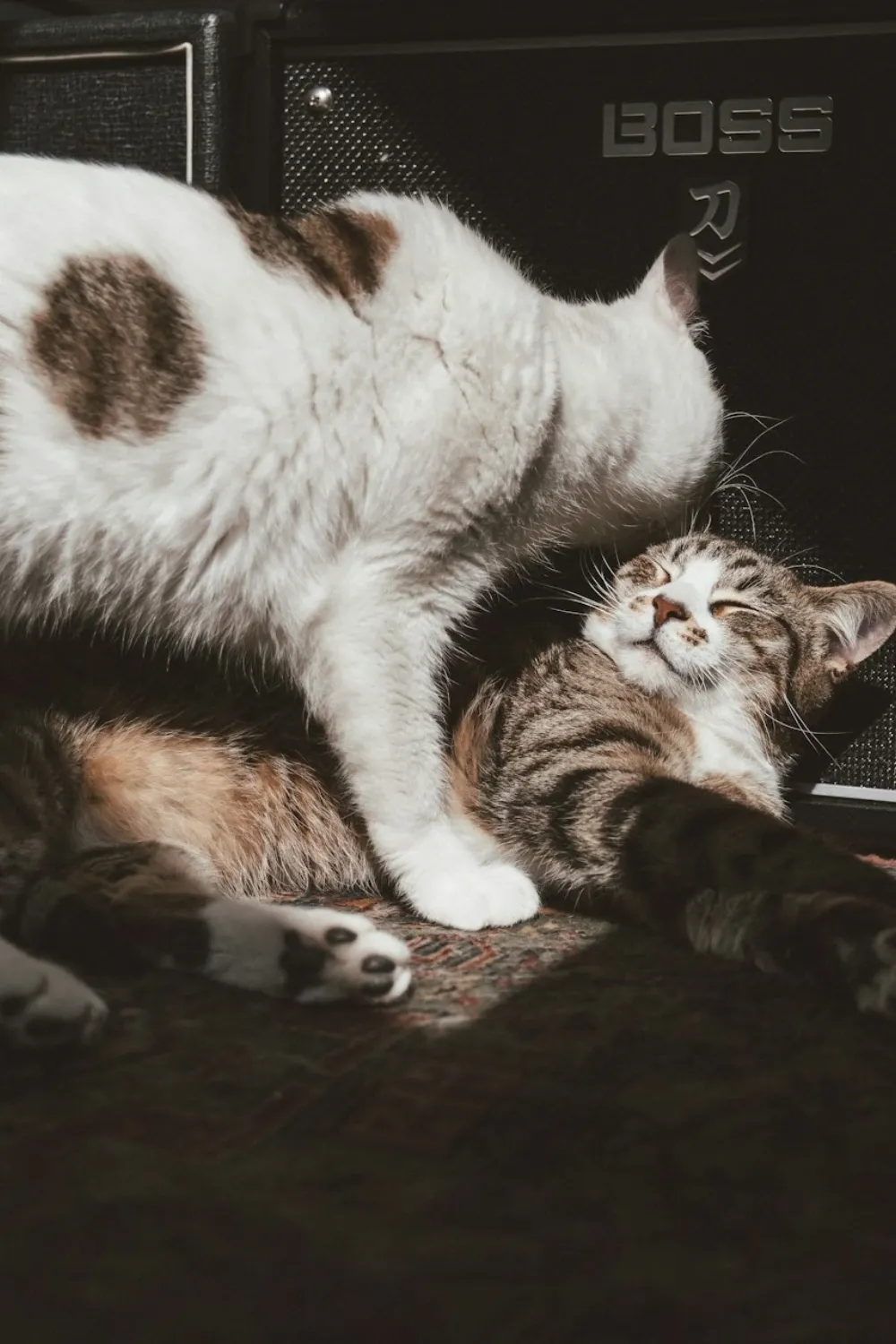
If a real fight already happened, separate them and restart slowly. Check both cats for wounds too, because cat bites can look minor and still turn serious. This guide on managing cat aggression between housemates walks through the reset step by step.
Go easy on the scared cat as well. Rebuilding a shy cat’s trust usually takes longer than owners expect.
Which of these fixes have you tried at home? Tell me in the comments.
Why This Matters
This is far more common than most people think. A November 2026 veterinary behaviour review says intercat tension affects 62.2% to 87.7% of multi-cat households.
Staring alone shows up in 44.9% of homes. Most owners only notice trouble after a physical fight, and by then the relationship is already damaged.
The tricky part is that a stressed cat can look sick. Signs of cat depression overlap with illness, so a vet visit always comes first.
Once real fights start, tolerance is a more realistic goal than best friends. Catching it early gives you a better shot.
Key Takeaways
- Peace and silence aren’t the same thing.
- Stares and blocked doorways are early warnings.
- The hiding cat is usually the one in trouble.
- Rule out health issues first.
- Spread resources out and never punish.
Before You Go
Cats rarely announce a problem. They show it in small ways, and you’re the one who can catch it.
If this helped, follow Furry Found on X and Facebook for more cat care tips and rescue stories.
Disclaimer: This article is for informational purposes only and is not a substitute for professional veterinary advice. If your cat is injured, not eating, or in distress, please consult a vet.