


Here’s a story trainers hear all the time. A dog rolls onto its back for a visitor. The visitor reaches down for a belly rub. The dog bites.
Nobody saw it coming, but the dog had been talking the whole time. Most of us just don’t speak the language yet.
The Belly Flop Isn’t Always “Pet Me”
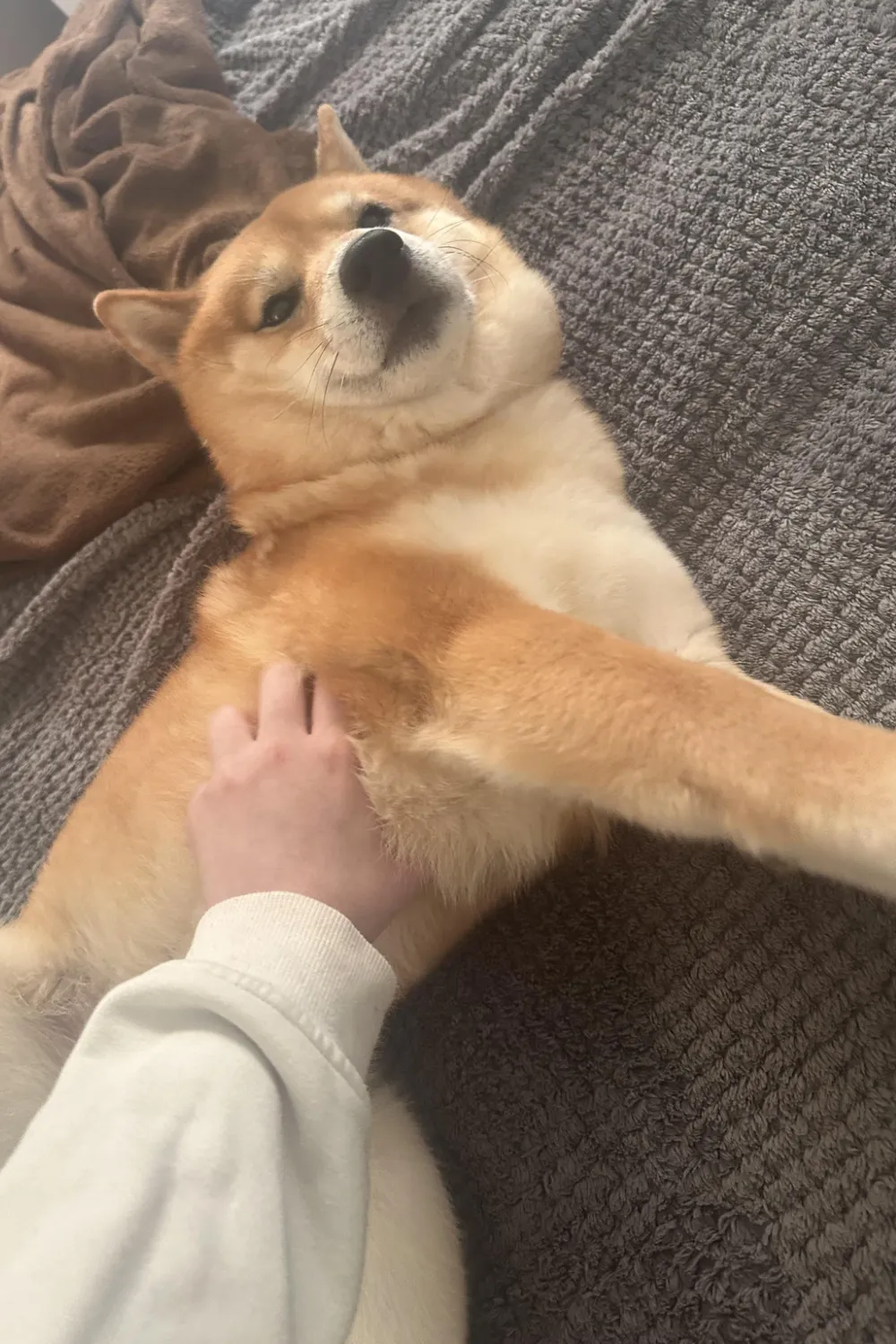
A dog on its back can mean trust, play, or a way to cool down. It can also mean “please give me space.” A dog who wants petting is usually fully on its back, loose, legs out, wiggling, with a relaxed face and mouth.
A dog who is “tapping out” looks different. The body and face are tense, it lies partly on its side, the whites of the eyes show, and it may lick its lips.
Dr. Karen Sueda, a board-certified veterinary behaviorist, calls rolling over when scared a normal appeasement signal. The message is “don’t come closer.”
A Quick Check Before You Reach Down
Look at the whole dog, not just the belly. Loose and wiggly is a yes. Stiff, frozen or trembling is a no.
Not sure? Try the five-second test. Stroke for five seconds, then stop. If your dog asks for more, carry on. If your dog tenses up, stand up and walk away. Pushing in can make the fear worse.
Other Ways Dogs Say “I Trust You”
Soft eye contact is a big one. A 2015 study in Science found that long, loving gazes raised oxytocin, the bonding hormone, in both dogs and their owners.
Sleeping close to you counts too, though one trainer notes that sleeping between your legs can also mean a dog feels insecure.
Following you from room to room often comes from attachment. Researchers say dogs use their owners as a “secure base,” much like children do with caregivers.
This list of trust signs from Doggodigest adds one more many owners will recognise: bringing you a favourite toy.
Which of these does your dog do? Tell me in the comments.
If Your Dog Came From a Shelter
Trust takes longer here. A common guide is 3 days to decompress, 3 weeks to learn routines, and 3 months to feel at home. Some dogs need six months or more.
Don’t force belly rubs, hugs or long stares. Let your dog come to you.
Take Blue, a Texas shelter dog who was returned twice before a family drove 22 hours to meet him. Some dogs just need the right person and more time.
Bringing a dog home soon? These things every first-time dog owner should know before day one can make those early weeks easier.
Why This Matters
The Dogs Trust National Dog Survey drew on more than 400,000 UK dogs and their owners. It found that 76% of owners missed that a dog rolling over when approached could be uncomfortable or need space.
The charity also reported over eight thousand calls in a year from owners wanting to give up their dogs because of problem behaviours.
Shelters see this side too. Willow the Great Pyrenees was surrendered by his owner over aggression concerns, and a North Texas shelter refused to euthanize him.
Reading body language early helps you step in before things escalate.
One Last Thing
Next time your dog flops, take a second to look before you pet.
Visit Furry Found for more dog behaviour, adoption and care stories, and follow us on X and Facebook.
Disclaimer: This article is for informational purposes only and is not a substitute for professional veterinary or behavioral advice.