


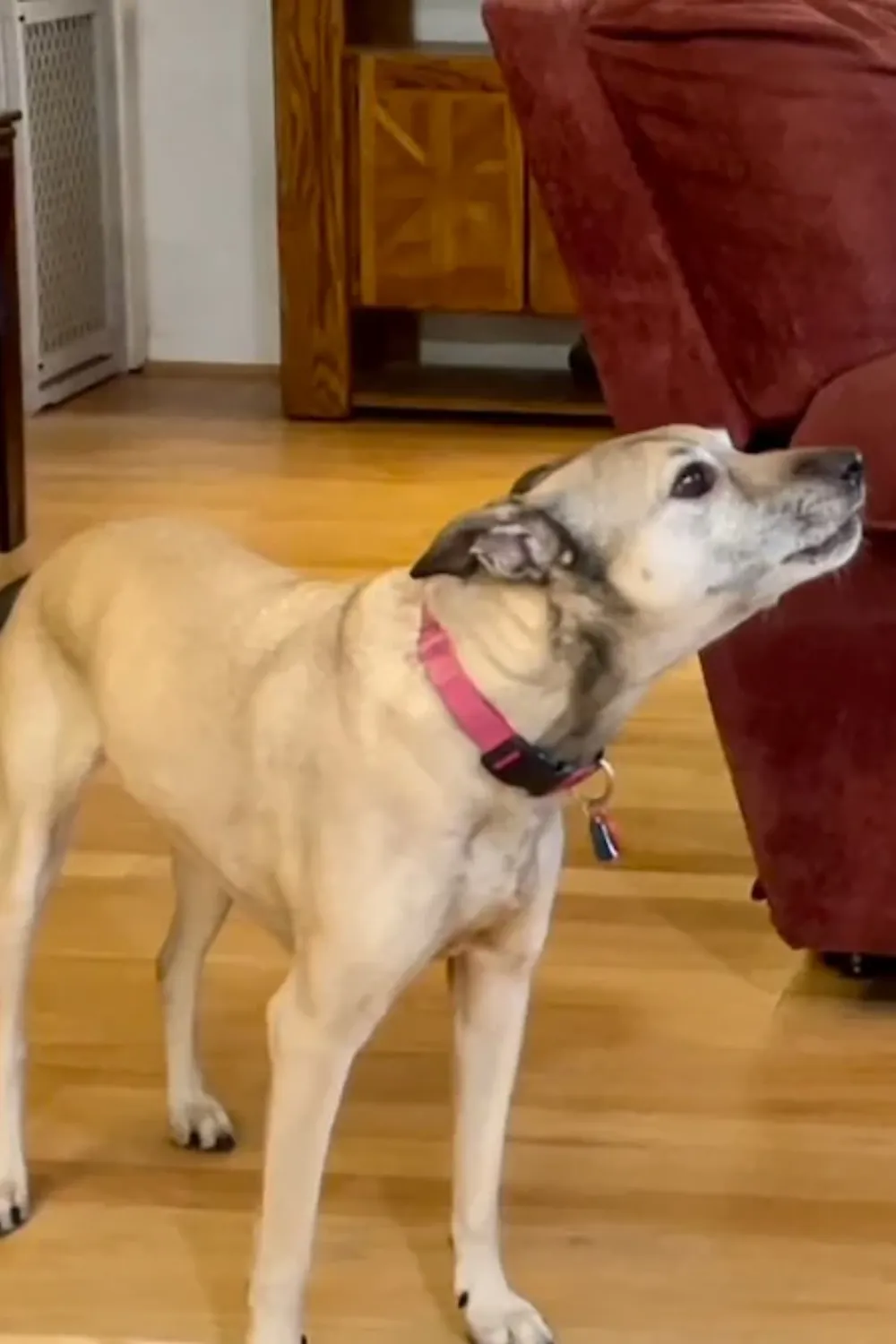
It’s 3 AM. Your senior dog is barking at an empty corner, and nothing you say makes it stop.
Many owners tell me the same thing the next morning: “He’s doing it on purpose.” He usually isn’t. If your dog is eight or older and the barking is new, dementia could be the reason.
Why Your Dog Barks When Nothing Is There
Dogs can develop canine cognitive dysfunction, or CCD. Think of it as the dog version of dementia. The brain stops reading the world properly. A dark room feels strange. Barking is how a scared, confused dog calls for help.
Vets also talk about “sundowning,” where confusion gets worse in the evening and at night. Some dogs sleep all day and pace all night.
Attention Barking vs Dementia Barking
Attention barking has a pattern. It starts when you’re busy and stops when you show up.
Dementia barking looks different. It comes at odd hours, often with no trigger. Your dog may keep pacing or staring even after you walk in.
Look for other signs too: accidents in the house, getting stuck in corners, ignoring his name. This Doggodigest guide on other reasons dogs bark helps you rule out fear and boredom.
Rule Out Other Causes First
Dementia is only diagnosed after other problems are ruled out. Pain, hearing loss, poor eyesight and thyroid trouble can look the same.
Restlessness and pacing at night can also point to bloat, which is a fast-moving emergency. If his belly looks swollen or he keeps retching, call a vet right away.
What Can Help Tonight
Owners often say small changes help. Keep a soft light on, so waking up in the dark is less scary. Move his bed into your room.
Keep feeding, walks and bedtime at fixed times. A calm evening walk can help him settle, and these common dog walking mistakes are worth avoiding.
These are owner tips, not treatment, so check with your vet. And please don’t scold him. He can’t control it.
What to Bring to the Vet
Keep a one-week log of when he barks and for how long. Record a couple of night clips on your phone.
Then ask about pain checks, bloodwork, diet and medication options. For everyday comfort at home, our 10 senior dog care tips are a good starting point.
Why This Matters
This isn’t rare. A study of 15,019 dogs in the Dog Aging Project found the odds of CCD rose 52% with each added year of age. Dogs that weren’t active had 6.47 times higher odds than very active dogs.
The study can’t prove inactivity causes dementia. Earlier estimates ranged from 28% of dogs aged 11 to 12 to 68% of dogs aged 15 to 16.
Researchers also call CCD underdiagnosed, because many owners assume it’s just old age. That’s how dogs end up scolded instead of helped.
Key Takeaways
- New night barking in a senior dog deserves a vet visit.
- Rule out pain and hearing loss first.
- Don’t scold. Change the night setup instead.
- Bring a log and videos to the appointment.
Before the Next Sleepless Night
Has your dog’s barking changed with age? Tell me in the comments what you noticed first. Your story could help another owner.
For more senior dog guides and rescue stories, follow Furry Found on X and Facebook.
Disclaimer: This article is for informational purposes only. Please consult your vet about your dog’s health.