

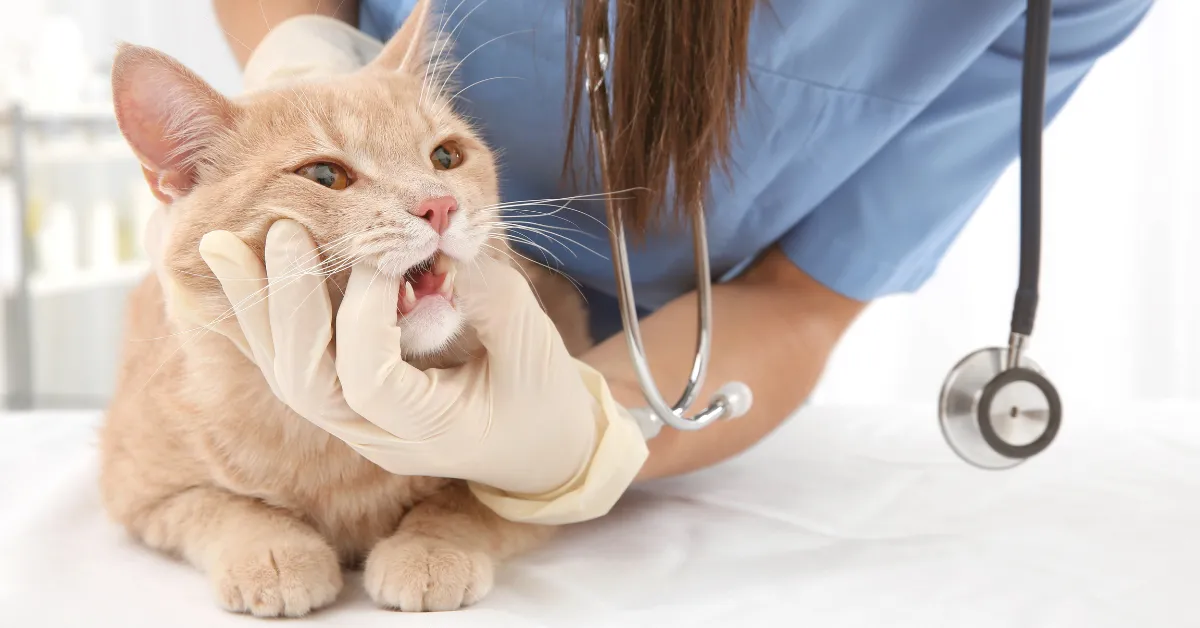
A cat with a painful mouth will often eat anyway, just more slowly, or with its head tilted to one side. Most owners never connect that to a dental issue. By the time something looks obviously wrong, the damage has usually been building for months.
Cat dental disease is one of the most common health problems in cats, and also one of the easiest to overlook.
What Is Actually Happening in There
The three most common conditions are gingivitis, periodontitis, and tooth resorption.
Gingivitis starts with plaque that hardens into tartar and inflames the gums. It is usually reversible if caught early. Left alone, it progresses to periodontitis, which damages the tissue and bone holding the tooth in place. That damage cannot be reversed.
. That is not a rare condition. It is the default outcome when dental health is not actively maintained.
Full diagnosis usually requires probing the gums and X-rays of the jaw, both of which need anesthesia. This is why a vet exam is the only way to know what is actually going on, because there is no reliable way to see the full picture at home.
[Cornell's feline health researchers note that human toothpaste is toxic to cats](https://www.vet.cornell.edu/departments-centers-and-institutes/cornell-feline-health-center/health-information/feline-health-topics/feline-dental-disease) and that daily brushing with a cat-safe product is the most effective prevention available. They also point out that only the outer surfaces need brushing, since the tongue handles the inner side.
The bacteria involved in dental disease do not stay in the mouth. [The same bacterial load that makes cat mouths a concern in other contexts](https://furryfound.com/cat-bites-look-minor-and-that-is-the-problem/) is present in cats with advanced gum disease, and Cornell links severe gingivitis to systemic conditions including kidney disease and diabetes. [Cats managing chronic illness already carry a heavier load](https://furryfound.com/if-your-cat-has-ever-had-insulin-shots-these-new-diabetes-drugs-are-not-an-option/), and dental disease adds to it in ways owners rarely see coming.
[Small behavioral shifts are often the earliest signal](https://furryfound.com/seven-signs-your-rescue-cat-is-starting-to-trust-you/), and dental pain is one of the more common reasons a cat quietly changes habits it used to keep without thinking.
## Conclusion
Has your cat ever had a dental issue that came up at a routine vet visit rather than something you noticed at home? Drop what happened in the comments below.
For more cat health and care stories, follow [Furry Found on X (Twitter)](https://x.com/Furryfound) and [Facebook](https://www.facebook.com/furryfound/), and visit [Furry Found](https://furryfound.com) for more.
cat teeth problems](https://furryfound.com/wp-content/uploads/2026/10/cat-teeth-problems-1-683x1024.webp)
Tooth resorption is different. It starts inside the tooth and breaks down the structure from within, showing up as a pinkish defect at the gumline only after significant damage has occurred. It is the most common cause of tooth loss in cats, affecting an estimated 30 to 70 percent, and its cause is still unknown.
Signs are easy to miss: reluctance to eat hard food, drooling, bad breath, red or swollen gums, or a cat that suddenly seems irritable. Tooth resorption can be extremely painful, and cats will hide it.
Why Owners Keep Missing It
Cats do not show pain the way dogs or people do. A cat with a mouth full of problems may still eat, still groom, still seem normal. The discomfort shows up in subtle shifts in behavior rather than obvious distress, and those shifts are easy to write off as mood or personality.
Research cited by feline health experts puts the number of cats over age three with some form of dental disease at roughly three in four. That is not a rare condition. It is the default outcome when dental health is not actively maintained.
Full diagnosis usually requires probing the gums and X-rays of the jaw, both of which need anesthesia. This is why a vet exam is the only way to know what is actually going on, because there is no reliable way to see the full picture at home.
Cornell’s feline health researchers note that human toothpaste is toxic to cats and that daily brushing with a cat-safe product is the most effective prevention available. They also point out that only the outer surfaces need brushing, since the tongue handles the inner side.
The bacteria involved in dental disease do not stay in the mouth. The same bacterial load that makes cat mouths a concern in other contexts is present in cats with advanced gum disease, and Cornell links severe gingivitis to systemic conditions including kidney disease and diabetes.
Cats managing chronic illness already carry a heavier load, and dental disease adds to it in ways owners rarely see coming.
Small behavioral shifts are often the earliest signal, and dental pain is one of the more common reasons a cat quietly changes habits it used to keep without thinking.
Conclusion
Has your cat ever had a dental issue that came up at a routine vet visit rather than something you noticed at home? Drop what happened in the comments below.
For more cat health and care stories, follow Furry Found on X (Twitter) and Facebook, and visit Furry Found for more.
This article is for informational purposes only.