

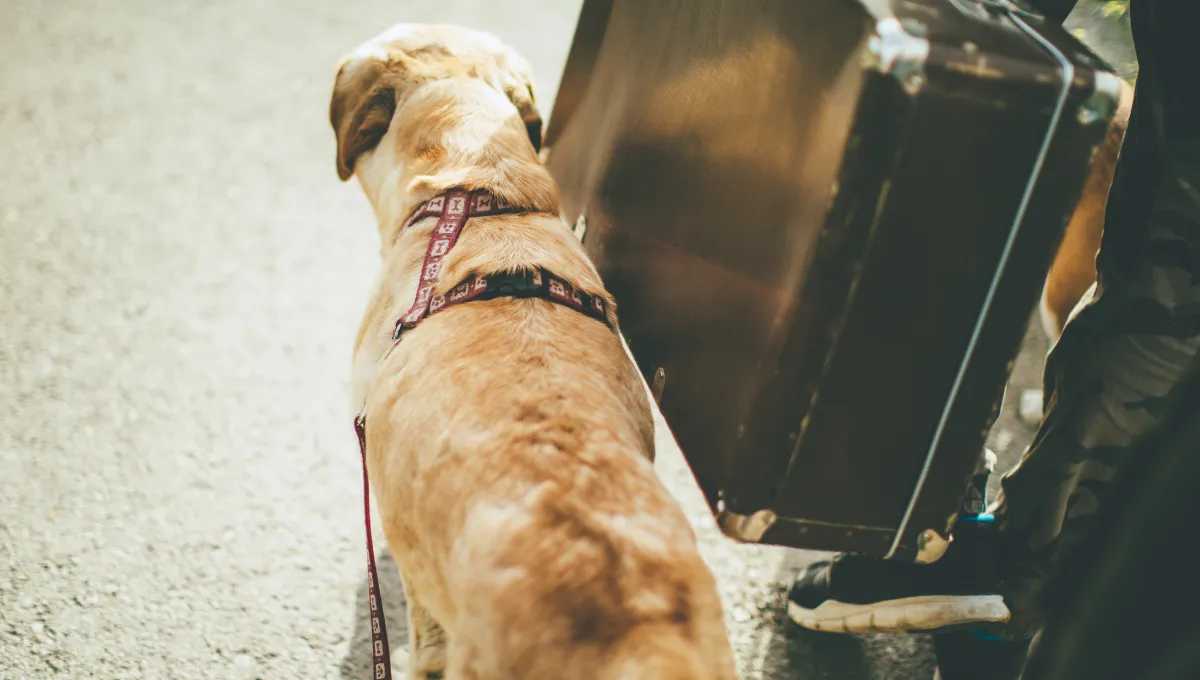
Most dog travel problems do not start at the airport or on the road. They start two weeks earlier, when owners assume they have more time to prepare.
Here are the ten mistakes that catch dog owners off guard, and what to do instead.
1. Skipping the Pre-Travel Vet Visit
A vet visit before travel is not optional if you are flying or crossing state lines. It confirms vaccinations are current and produces the health certificate most airlines and states require.
Book this early. Vet clinics fill up fast around the holidays.
2. Not Knowing the Health Certificate Window
Most health certificates must be issued within 10 days of travel. Many owners book the vet visit too early, which means the certificate expires before the trip.
Check the exact window required by your airline or destination before scheduling the appointment.
3. Testing Anti-Nausea Medication on Travel Day
Nearly 48 percent of dog owners say their dog experiences motion sickness symptoms when traveling in a car. The fix exists. The mistake is trying new medication for the first time on departure morning.
Any new medication should be tested at home first, at least one to two weeks before the trip, so you know how your dog responds.
4. Leaving Crate Training Until the Night Before
Crate acclimation takes two to four weeks when done properly. A dog that has never been comfortable in a carrier will not become comfortable overnight.
Start the process as soon as you know you are traveling.
5. Assuming the Airline Allows Your Breed in Cargo
As QZ’s 10 tips for traveling with your pet during the holidays notes, cargo travel carries real risks, particularly for flat-faced breeds like Bulldogs, Pugs, and Boston Terriers. Many airlines restrict or refuse them entirely due to their airway anatomy.
Confirm your airline’s breed policy before booking anything.
6. Assuming Sedation Is Safe for Air Travel
The AVMA advises against sedating pets for air travel except in unusual circumstances. Sedation affects how a dog regulates body temperature and responds to stress at altitude.
If your dog has severe travel anxiety, talk to your vet about non-sedating alternatives well before the trip.
Have you ever had a trip go wrong because of something you wish you had prepared earlier? Tell me in the comments.
7. Feeding Right Before the Car or Flight
Feed a light meal three to four hours before travel, not right before departure. A full stomach combined with motion or stress is a reliable recipe for car sickness.
Travel mistakes and everyday mistakes often come from the same place. Assuming a routine will work without thinking it through. These common dog walking mistakes cover the habits that cause problems owners never see coming.
8. Leaving a Dog in a Parked Car
According to AVMA research on pets in vehicles, a car’s interior temperature can rise approximately 20 degrees Fahrenheit in 10 minutes and nearly 30 degrees in 20 minutes. Cracked windows do not meaningfully reduce this.
Not even for a quick errand.
9. Not Verifying the Microchip Registration
A microchip only works if it is registered with current contact information. Many owners discover the chip has outdated details after their dog is already lost.
An outdated microchip registration is the difference between a reunion and a permanent loss. Lilly, a Kansas dog found as a stray five years after going missing, was reunited with her owner because the chip was still registered and current.
10. Not Building in Extra Time for Stops
Dogs need regular breaks on road trips to relieve themselves and stretch. A trip that takes three hours without a dog takes longer with one, and that is not a problem if you plan for it.
Road trip stops are also a good time to check your dog for ticks, especially in wooded or grassy areas. These fall hiking tips for dog owners cover what to watch for during outdoor travel that most owners overlook until something goes wrong.
Key Takeaways
- Book the vet visit early and confirm the health certificate window.
- Start crate acclimation at least two to four weeks before departure.
- Test any new medication at home first.
- Never leave a dog in a parked car, even briefly.
- Verify your dog’s microchip registration before the trip.
Most Mistakes Happen Before You Leave the Driveway
The preparation window is shorter than it feels. Start earlier than you think you need to.
Share your thoughts in the comments, and follow Furry Found on X and our Facebook page for more practical pet guides like this.
Disclaimer: This article is for informational purposes only and is not a substitute for veterinary advice.