

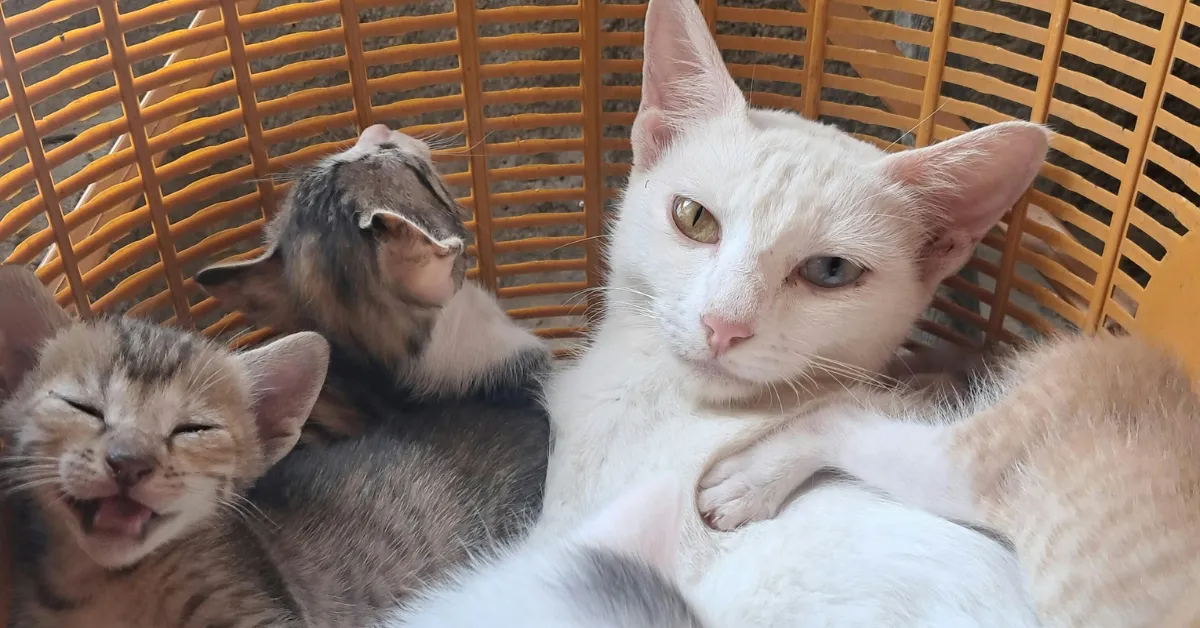
Most people with a new litter focus on the kittens. That makes sense. But the first week after birth is when problems tend to show up quietly, and catching them early is almost entirely about what gets checked and when.
Two things matter most in those early days. Neither takes long.
What the First Few Days Actually Look Like
The mother will spend most of her time in the nest, nursing, cleaning, and repositioning the kittens. Healthy kittens sleep and eat, piling together for warmth and rarely making noise unless something is wrong.
If a kitten is separated and crying, or the mother is not returning to the nest, most problems at this stage are feeding-related or temperature-related.
The First Thing to Check: Kitten Weight
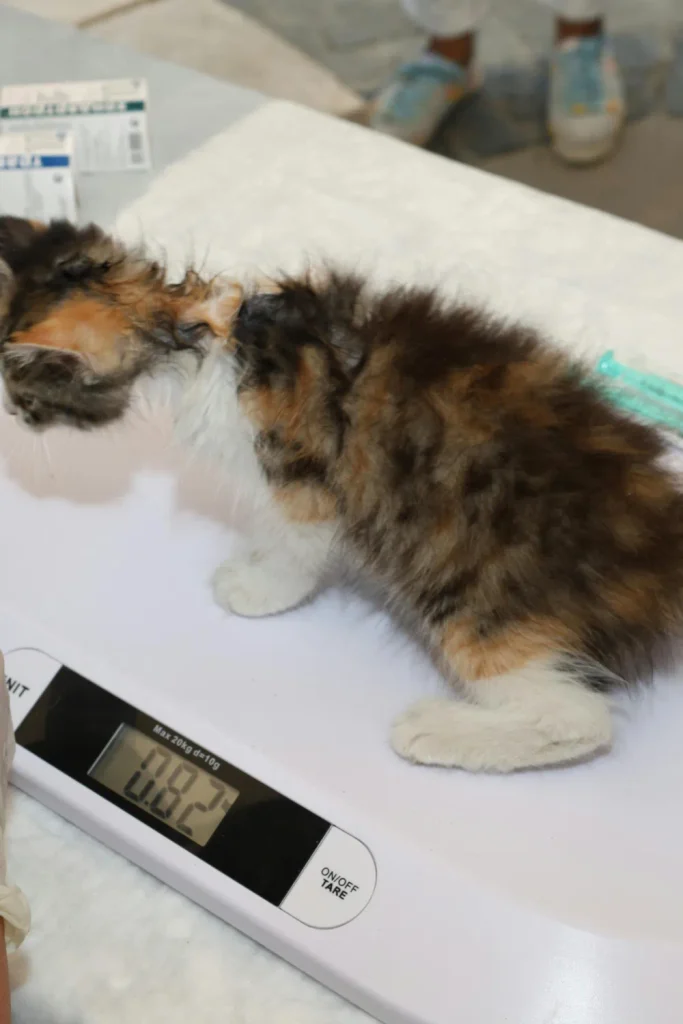
Weight is the clearest daily signal available. A kitten that is nursing well gains weight. One that is not, does not.
Healthy neonatal kittens typically gain approximately 7 to 14 grams per day. Any failure to gain weight is always a concern in a kitten under eight weeks, and a plateau or weight loss should be treated as urgent. Weigh each kitten at least once a day and record it in grams.
Small drops between feedings are normal. A kitten that weighs less at the end of a 24-hour period is the one to watch.
Cats often show early signs of a problem before anything obvious appears. In a newborn, those signs almost always show up on the scale first.
The Second Thing to Check: Whether the Mother Is Nursing
Watching the mother nurse sounds obvious, but it is easy to assume it is happening when it is not. A calm mother in the nest does not always mean every kitten is feeding.
If any kittens are showing coordination difficulties, lethargy, diarrhea, or vomiting, that is reason to contact a vet rather than wait. These signs often trace back to inadequate nursing in the first days.
Confirm that each kitten is latching and that the mother is not pushing any one away. A kitten that nurses well feels warm, has a slightly round belly, and sleeps quietly.
How the mother is feeling matters just as much as what she is physically doing. A stressed or unwell mother will not nurse reliably, and the kittens reflect that quickly.
When to Call a Vet
Contact a vet if any kitten is not gaining weight after 24 hours, if the mother refuses to nurse, or if kittens are cold and not warming up.
A mother cat that seems withdrawn or unusually quiet after birth may be dealing with more than just tiredness, and that affects her nursing.
Conclusion
Have you been through a litter before, or are you figuring it out for the first time? Share your experience in the comments below.
For more cat care guides, follow Furry Found on X and Facebook, and visit Furry Found for more.
This article is for informational purposes only.