

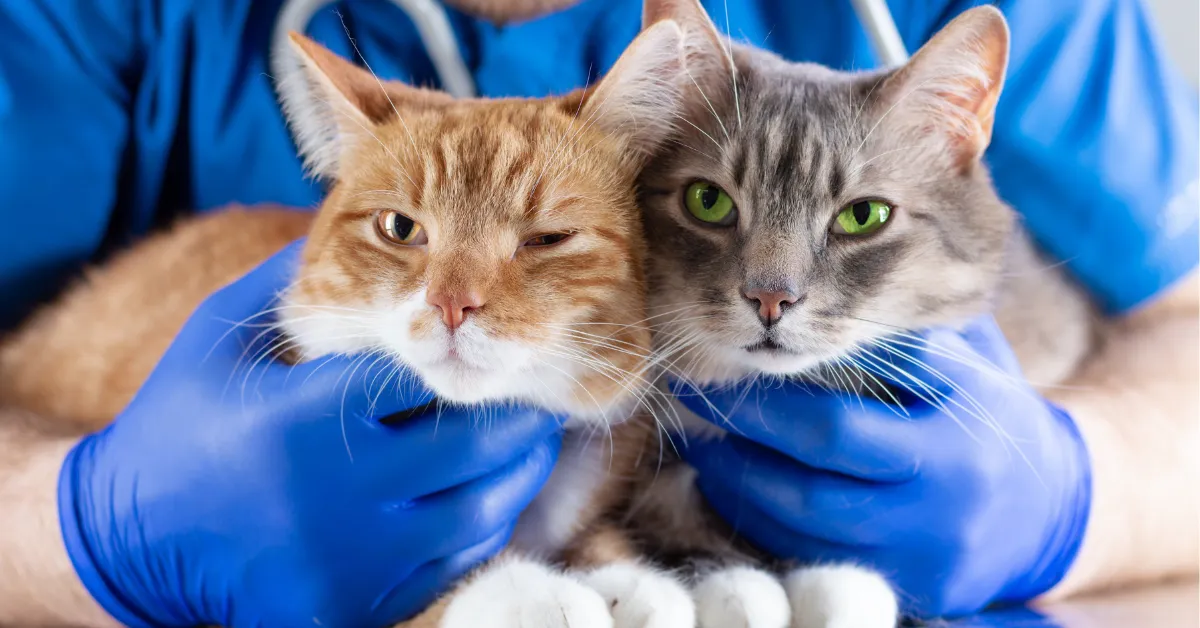
Two cats named Gary and Shaggy just changed what veterinary medicine knows about an inherited condition that affects millions of people worldwide.
Researchers at Cornell University’s College of Veterinary Medicine and Baker Institute of Animal Health have documented the first known cases of Marfan syndrome in domestic cats, published in the September 19 issue of Scientific Reports.
Who Gary and Shaggy Are
Gary and Shaggy are brothers. As kittens, they had noticeably longer limbs than expected. Later examinations revealed problems with the structures of their eyes and enlargement of the aorta, the body’s largest artery.
Those three findings together pointed researchers toward Marfan syndrome, a rare inherited disorder that weakens the body’s connective tissues. It affects roughly 1 in 4,000 people. Until Gary and Shaggy, it had never been documented in cats.
What the Research Found
The team, which included collaborators at Ghent University in Belgium, the University of Pennsylvania and the Schwarzman Animal Medical Center in New York City, combined clinical evaluations with genetic sequencing.
They identified the responsible gene: FBN1, which codes for a protein called fibrillin-1. Fibrillin-1 is a building block found throughout the body in blood vessels, bones, ligaments, skin and eyes. When it is disrupted, connective tissue throughout the body is affected.
Both brothers carried two altered copies of FBN1, inheriting one changed copy from each parent. In humans, a single altered copy is enough to cause Marfan syndrome. Inheriting two altered copies is extremely rare and would typically suggest a more severe disease course.
Why Gary and Shaggy Survived
This is the part of the research that required the most explanation, and the Cornell University College of Veterinary Medicine page on the findings covers it carefully.
The cats’ variant did not completely shut down the FBN1 gene. Instead, it partially disrupted the way the gene’s instructions are processed, allowing some normal fibrillin-1 production to continue. That partial function appears to be why they survived into adulthood despite carrying two copies of a variant that would typically cause more severe disease.
“The findings may help veterinarians recognize similar cases in the future,” said Dr. Jacquelyn Evans, senior author and assistant professor at the Baker Institute for Animal Health.
What This Means for Veterinary Practice
Until now, a cat presenting with unusually long limbs, eye abnormalities and aortic changes would not have a Marfan diagnosis available to them. Vets might recognize individual symptoms without connecting them to a genetic cause.
This research gives clinicians a framework. A cat with this combination of features can now be evaluated for FBN1 variants, and a diagnosis can follow.
It also matters for breeding. Marfan syndrome in humans is managed, not cured. Identifying it genetically in cats opens the door to the same kind of informed breeding decisions that have reduced the incidence of other inherited conditions in domestic cats and dogs.
Science keeps finding things in cats that nobody expected. Earlier this month, researchers formally described a completely new wild cat species for the first time in a century. Gary and Shaggy represent a different kind of first.
Why This Matters
Marfan syndrome research in humans has been ongoing for decades. The condition is managed with medications, physical restrictions and sometimes surgery to address aortic enlargement before it becomes life-threatening.
The comparative medicine approach, studying disease in animals to learn things that apply across species, is central to how Cornell’s Baker Institute works. Gary and Shaggy are not just a veterinary finding. They are a data point in a much larger conversation about how connective tissue disorders work at the genetic level.
“This discovery is a great example of how pet parents can collaborate with veterinary and genetic experts to learn something that could help other animals in the future,” Evans said.
If your cat has unusually long limbs combined with any eye or heart issues, this is worth mentioning to your veterinarian. It is rare. It is now also documentable.
Did you know conditions like Marfan syndrome could affect cats? Tell us in the comments.
For more animal health news and rescue stories, follow Furry Found on X and Facebook.
Disclaimer: This article is for informational purposes only and is not veterinary advice. Contact your veterinarian if you have concerns about your cat’s health.