

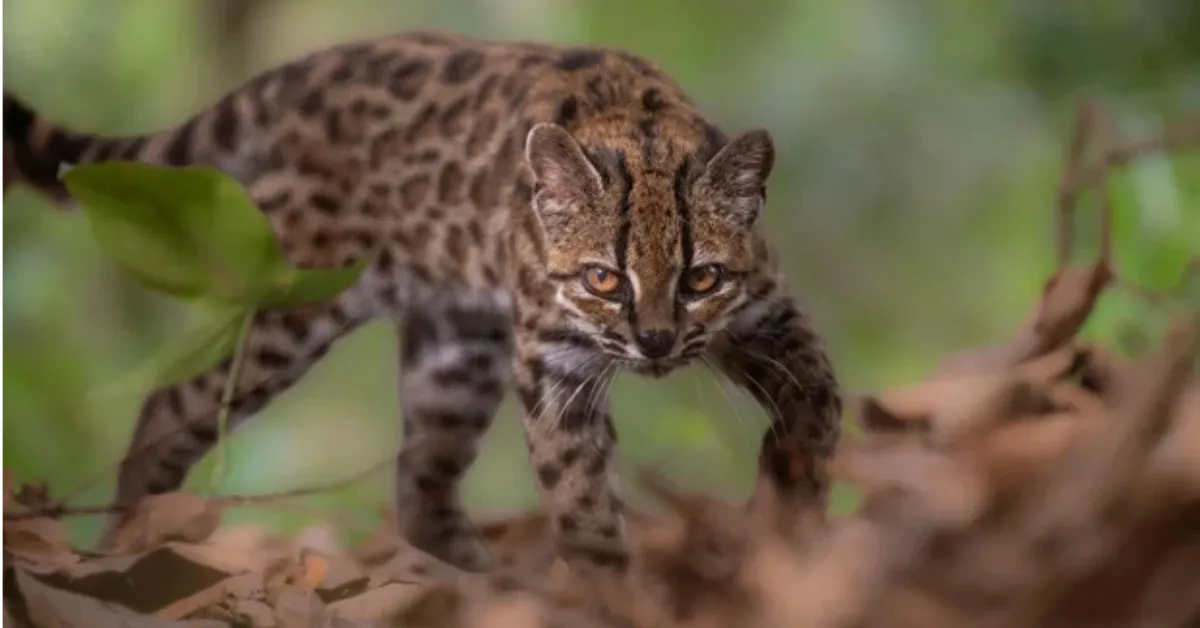
Someone found a kitten on a road in Bolivia and took it home thinking it was a stray.
It wasn’t.
It was a species science had never seen before, and it took researchers five years to prove it.
How the Discovery Happened
The kitten was picked up near a forest in the Yungas region, the cloud forest where the Andes mountains meet the Amazon basin. A local man brought it home, kept it for about a year, and eventually handed it over to the Senda Verde wildlife sanctuary.
That is where biologist and National Geographic Explorer Paola Nogales-Ascarrunz first saw it.
Something about the animal didn’t match. The genetics confirmed it. Working with Jonas Lescroart of the University of Antwerp and geneticist Eduardo Eizirik, Nogales-Ascarrunz analyzed the cat’s full genome alongside museum specimens and samples from living animals.
The research, which began in 2021, was published Thursday in the journal Current Biology.
What Leopardus Tilcayo Actually Is
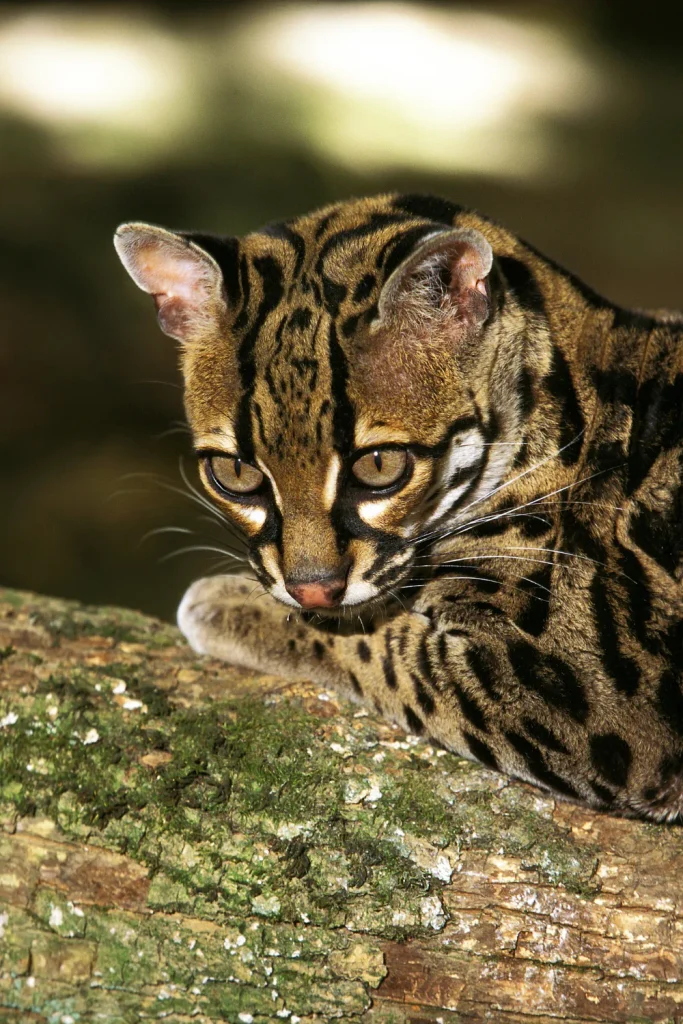
The tilcayo tiger cat is small, slender and spotted. It weighs around three pounds and measures between 17 and 20 inches from head to body, with a tail adding another 10 inches. Its coat is light brown with dark rosettes, open or partially closed, on a beige background. The ears are rounded.
Locals who encountered it in the Bolivian Andes had assumed it was a domestic cat. The resemblance is close enough that the error is understandable.
What separates it from every other known species is its DNA. Leopardus tilcayo diverged from its nearest relatives nearly 1.4 million years ago, during the Early Pleistocene. That kind of deep genomic divergence is not something you find in an animal that was already known to science.
The Name Itself Is the Story
The researchers did not name this species after a scientist or an institution. They named it after what local communities in the Yungas had always called it.
“It’s our way of honoring their ancestral knowledge and connection to this animal,” Nogales-Ascarrunz said.
The word tilcayo had been passed down through generations in the region without a direct translation into Spanish. The people who lived alongside this animal knew it long before any researcher arrived.
What Else the Research Found
The tilcayo was not the only finding in the paper. The same DNA analysis that confirmed the new species also resolved a longstanding classification problem in South American tiger cats.
Scientists had struggled to classify small spotted cats in Central and South America because they look so similar to each other. The new genomic work identified at least five distinct species where researchers had previously struggled to draw clear lines.
“Even in groups that are very well studied, like the cat family, apparently there’s still a diversity that is hidden,” said Lescroart.
The case also raises a familiar question about wild cats kept outside their natural habitat. Earlier this month, a serval was found living in a backyard enclosure in Louisiana after a house fire.
The tilcayo, by contrast, ended up at a sanctuary through a family that didn’t know what it had. The outcome was a scientific discovery. That is rarely how these situations go.
Why This Matters
Only two individuals have been found so far. A male lives at Senda Verde sanctuary in Yungas after the family that kept him handed him over. A female was rescued after being attacked by locals and released back into the wild.
Nogales-Ascarrunz described the animals as vulnerable to extinction, and said their small known numbers meant they could soon face a much greater risk of dying out.
The last time a new wild cat species was formally described was 1923, when researchers named the Uruguayan pampas cat. A century passed between that discovery and this one.
The Yungas cloud forest where the tilcayo lives is among the most biodiverse ecosystems on the planet and one of the least studied. This discovery makes the case that the gap between what science has documented and what actually exists there is still very large.
“So far, it’s only been detected in Bolivia,” Nogales-Ascarrunz said, “and not anywhere else on the planet.”
Did you know a new wild cat species had never been found in your lifetime before this? Tell us in the comments.
For more animal news and rescue stories, follow Furry Found on X and Facebook.
Disclaimer: This article is for informational purposes only. All scientific claims are sourced from the published research in Current Biology and affiliated reporting.