

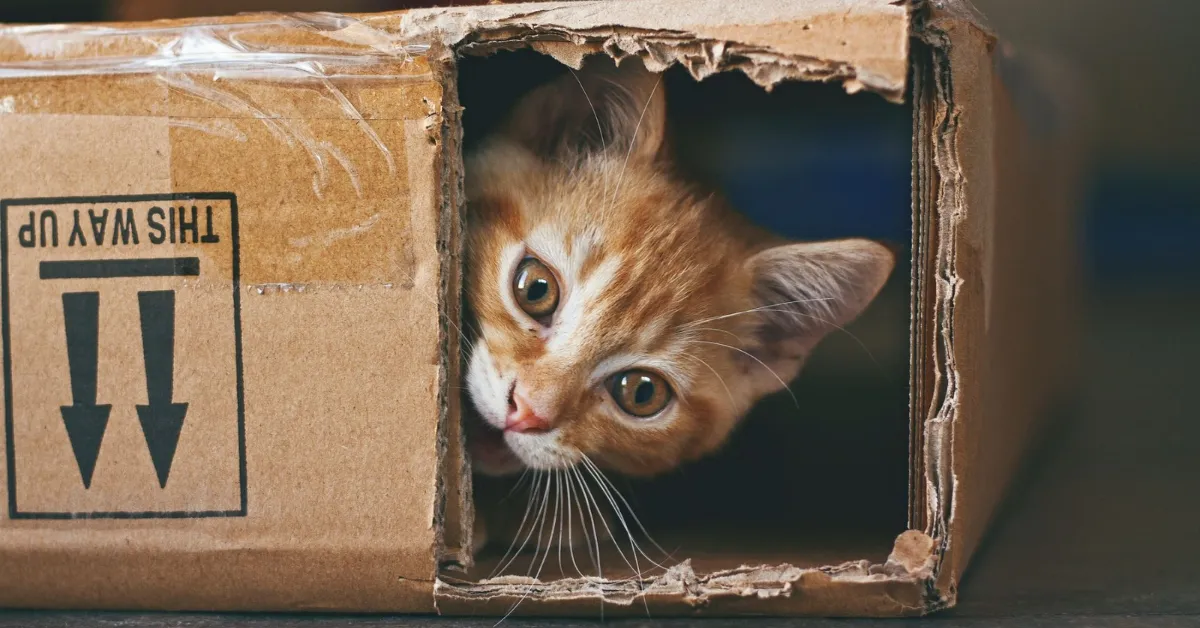
A shy ginger cat sat in a shelter box for a month. He wouldn’t come out for anyone. Someone adopted him anyway. Within a week, he was running to her instead of back to his box.
I think of that story whenever someone calls the cardboard box a silly cat habit. It isn’t. Researchers have measured what it does.
What Happened When Shelter Cats Got a Box
In 2014, Utrecht University researchers tracked 19 newly arrived shelter cats for 14 days. Ten got a hiding box. Nine didn’t.
By days 3 and 4, the box group scored clearly lower on a standard cat-stress scale. They were also more consistent. Some cats without boxes coped fine, but others showed far more stress than any cat with one.
By day 14, both groups had caught up. The box just got cats there faster.
Later studies agree. One trial of 72 caged cats found box cats had lower stress-hormone markers and ate more. Another found boxes helped cats settle about a week sooner, though they didn’t stop weight loss.
Why a Plain Box Works
A box gives a scared cat control. She decides how much of the room she sees, and nothing can sneak up from behind.
Behaviorist Mikel Delgado notes that pet cats have very little control over their lives. This piece on why cats treat boxes as instinctual security covers the instinct side well.
Shelters build on this. The BC SPCA’s Hide, Perch & Go box has two openings so a cat never feels trapped, and it soaks up her scent over time.
Does It Work at Home Too?
Honest answer: I couldn’t find a study done in regular homes. The trials were in shelters and clinics.
But a new home is another stressful move. Humane societies tell adopters to start in one small room, offer hiding spots, and never pull a cat out. A box fits that advice.
If you’re preparing a space before your cat arrives, these foster cat tips from LA rescues are a good place to start.
The same logic likely applies to vet trips and loud guests, but that’s my reasoning, not proven.
Setting One Up
- Pick a snug box, cut two openings, add a blanket.
- Put it in a quiet corner of one small room.
- Don’t wash it. Her scent is the point.
- Give each cat their own box.
Then step back. Sit nearby, toss a treat, and let her come out when she’s ready. Trust takes longer than most people expect, and knowing how long it actually takes to win over a shy cat helps you stay patient.

What kind of box did your cat pick? Tell me in the comments.
When Hiding Is a Warning Sign
Hiding for the first few days is normal. Not eating, drinking or using the litter box isn’t. Call your vet.
Still hiding after a week? Talk to the shelter or a behavior professional. Posture matters too: a relaxed nap is very different from a cat pressed at the back with wide eyes.
It’s also easy to misread, because most signs of cat depression are also signs of illness.
Why This Matters
In 2025, about 5.8 million dogs and cats entered US shelters, and 3 million were cats, according to the ASPCA’s shelter statistics. Most came in as strays.
Each one walks into a loud, unfamiliar building, and shelter experts say cats are most stressed in the first 72 hours. A cardboard box costs almost nothing.
Keep the Box
Next time a delivery arrives, let your cat have the box before the recycling bin does. It may be doing more than you think. For more cat care and rescue stories, follow Furry Found on X and Facebook.
Disclaimer: This article is for informational purposes only and is not a substitute for veterinary advice.