

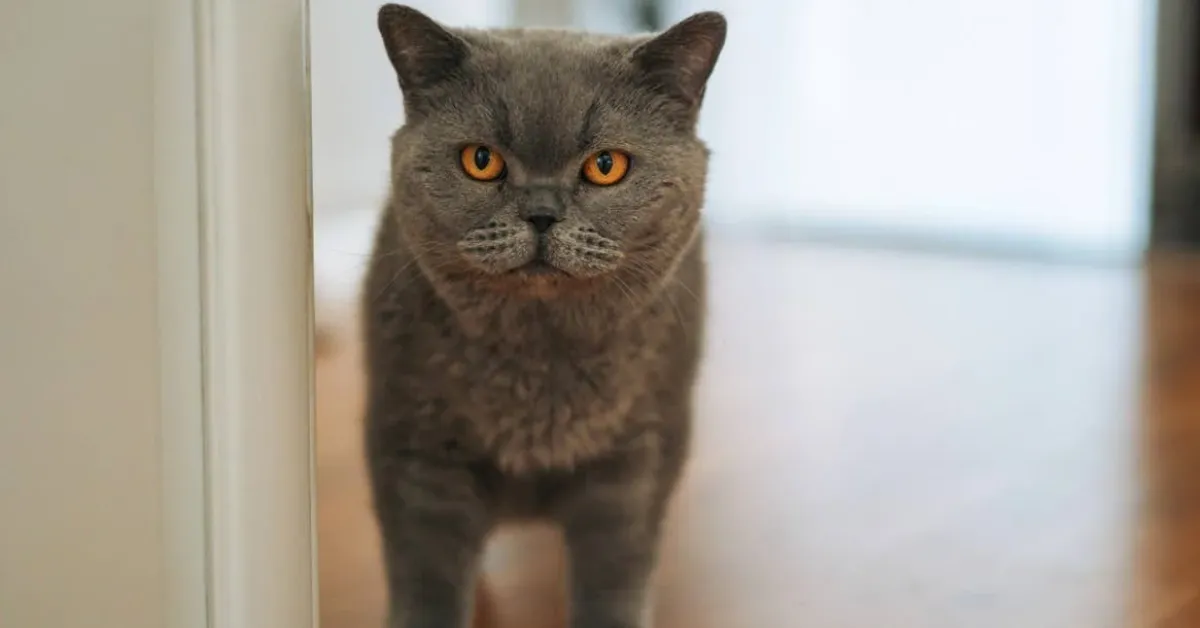
You look up from your phone and there it is. Flat stare, tight mouth, a face that says you’ve done something unforgivable.
I’ve read that look as anger too. But researchers say we usually read it wrong.
In one study, more than 6,000 people from 85 countries judged cat moods from short videos. The average score was just under 60 percent. That’s barely better than guessing.
So before you decide your cat is mad at you, run through these four checks, in this order.
Check 1: Is This Just Her Resting Face?
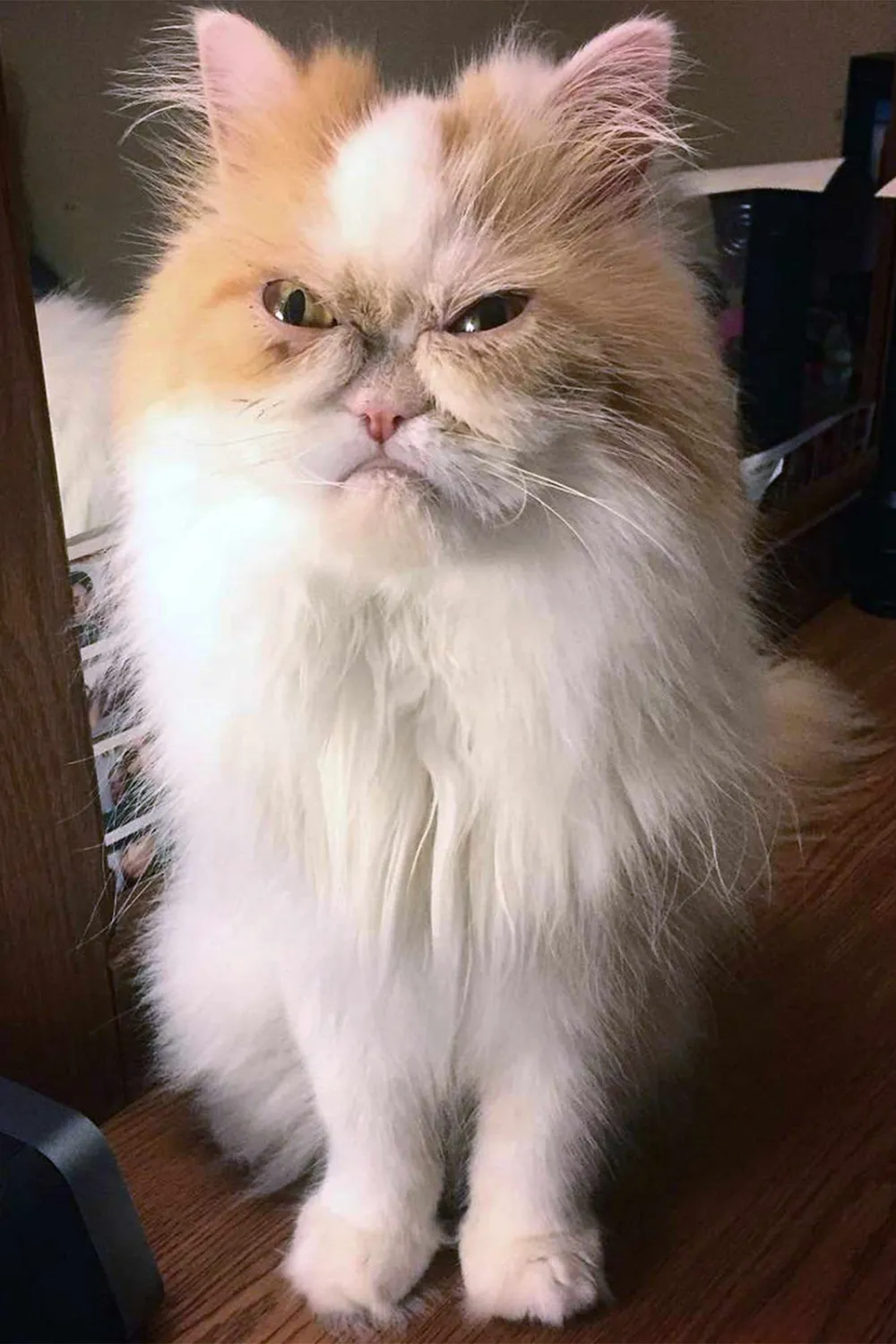
Some cats are built to look grumpy. A Nottingham Trent University study of nearly 2,000 cat faces found that flat-faced breeds can look pain-like even when they’re fully relaxed. Scottish Folds scored highest.
Grumpy Cat was the famous example. Her scowl came from an underbite and dwarfism, not a bad attitude.
Here’s the catch. A resting frown can still hide pain. So take a few photos while she’s relaxed. That’s her baseline.
Check 2: Could It Be Pain?
Cats hide pain well. The Feline Grimace Scale, built by vets at Université de Montréal, looks for outward ears, squinted eyes, a tense muzzle, whiskers pulled toward the face, and a lowered head.
Teeth are a common cause, and they can look fine and still be a problem. Watch for drooling, dropping food, pawing at the mouth, or suddenly skipping dry food.
Never give human painkillers. They’re toxic to cats.
Check 3: Is Something at Home Stressing Her Out?
Chronic stress is quiet. You may see more sleeping, less play, and a flat, passive mood.
Common triggers are a new pet, tension with another cat, or a litter box in the wrong spot. Try one box per cat plus one, and keep food and water in separate places.
Long hours alone count too, and your cat minds being left alone more than you think.
Check 4: Read the Whole Cat
One feature never tells the full story. Ears, whiskers, eyes, and tail work together, and this Feline Fam guide shows how to read them as a group.
Then try something simple. Look at her and blink slowly. In a 2020 study, cats were more likely to approach people who did it.
If she’s a rescue, watch for the signs she’s starting to trust you too. Try the slow blink tonight and tell me in the comments how she reacted.
When to Call the Vet
Don’t wait if the grumpy look comes with eating less, hiding, drooling, or a sudden mood change. Bring your baseline photos and a short video. They help more than you’d think.
Why This Matters
Cats hide discomfort, which is why dental problems go unnoticed so often. According to Cornell’s Feline Health Center, studies report that 50 to 90 percent of cats older than four have some form of dental disease.
Add the 60 percent accuracy rate above, and the risk is clear. We misread faces, and cats won’t tell us when something hurts.
Key Takeaways
- Photograph her relaxed face as a baseline.
- A frown plus behavior changes deserves a vet visit.
- Check stress at home, and read the whole cat.
Your Cat’s Face Is a Clue, Not a Verdict
Next time she gives you that look, don’t take it personally. Take a closer look. For more cat care stories and tips, visit Furry Found and follow us on X and Facebook.
Disclaimer: This article is for informational purposes only and is not a substitute for advice from a licensed veterinarian.